
EV Charger Installation Cost (2026): The Real Numbers
A home Level 2 EV charger is one of the highest-ROI service installs of the decade — but the install quote can range from $600 to $5,000 depending on three things most homeowners don't know to ask about. This is real 2026 pricing, the panel-capacity check that decides which end of the range you'll pay, and the federal tax credit stack.
Updated May 2026 · 9 min read
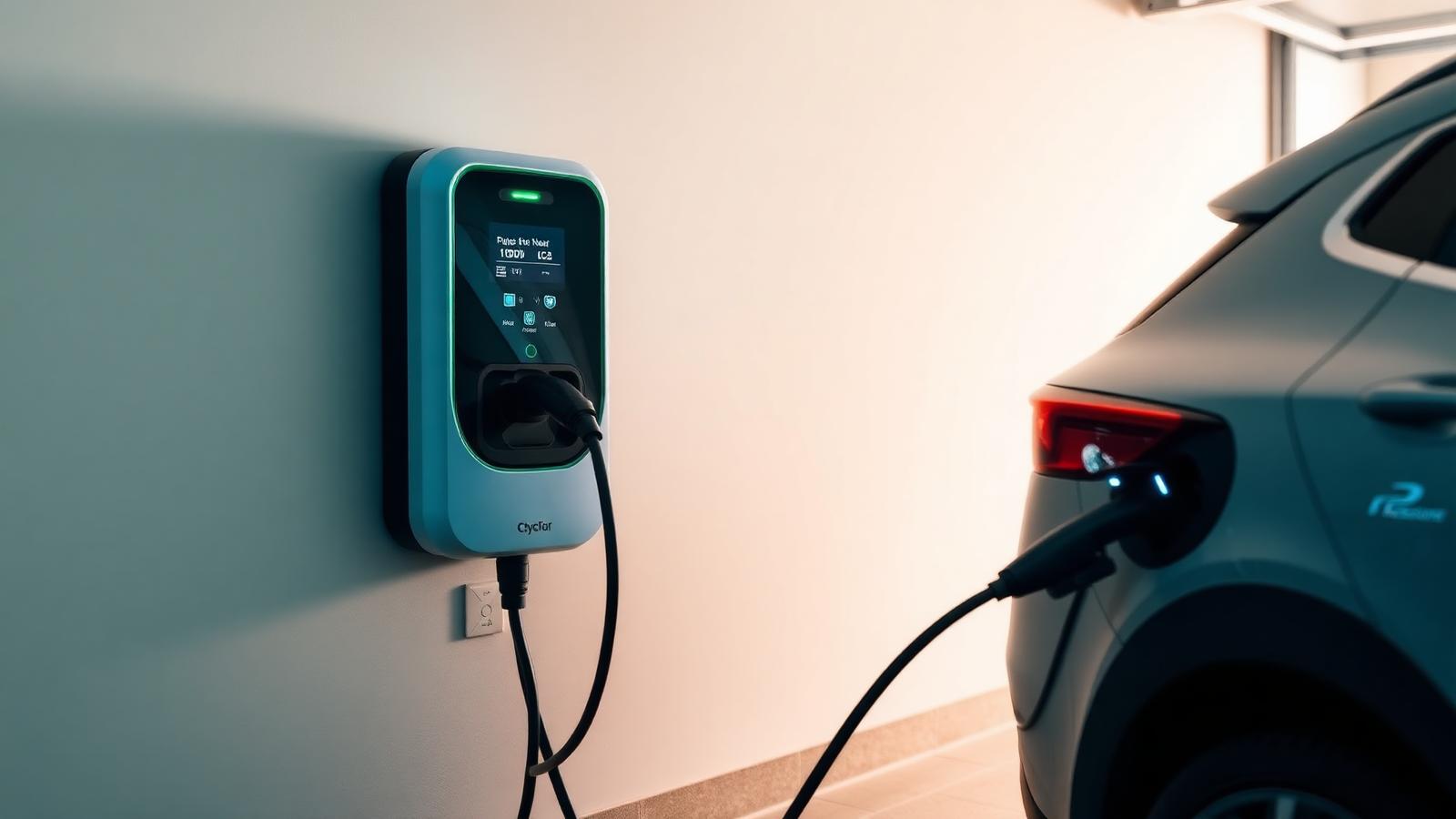
A 40-amp Level 2 install within 20 feet of the panel is the median residential job — $1,200–$1,800 all-in before tax credits.
2026 Total-Install Pricing
| Scenario | Charging speed | Total install (2026) |
|---|---|---|
| Level 1 (existing 120V outlet) | 3–5 mi/hr | $0 (use included cable) |
| NEMA 14-50 outlet (plug-in, 32A) | 22–30 mi/hr | $600–$1,400 |
| Hardwired 40A Level 2 | 28–35 mi/hr | $1,200–$2,200 |
| Hardwired 48A Level 2 | 35–44 mi/hr | $1,500–$2,800 |
| Long run (50+ ft) or detached garage | Same | +$800–$2,500 |
| Panel upgrade required first | Same | +$1,800–$4,500 |
The Three Things That Decide Your Quote
- Distance from the panel to the charger. Every foot of conduit and wire adds material and labor cost. Under 20 ft is the median; over 50 ft typically adds $800+.
- Panel headroom. A 200-amp panel with normal residential load almost always has room. A 100A or 125A panel with central AC usually doesn't — and a panel upgrade adds $1,800–$4,500.
- Indoor vs outdoor vs detached garage. Indoor garage on the panel side of the wall is the cheapest. Exterior wall through brick or stucco adds $200–$500. Detached garage with trenching adds $1,500–$3,500.
How to Check Panel Capacity in 60 Seconds
Open your panel cover and add up the breaker amperages of the big loads — central AC (typically 30–50A), electric range (40–50A), electric water heater (30A), electric dryer (30A), and the main breaker rating (100, 125, 150, or 200A). A licensed electrician runs a proper NEC load calc, but a quick rule: if the sum of the big loads is less than 60% of the main breaker, you almost certainly have headroom for a 40-amp EV circuit. If it's over 80%, you'll likely need a panel upgrade or a load-managed charger.
Charger Equipment: What's Worth Paying For
- Tesla Wall Connector ($475). The gold standard if you have a Tesla. NACS-native, 48A, sleek industrial design. Adapters available for J1772 EVs.
- Wallbox Pulsar Plus ($649). The best all-around 48A J1772 unit. Compact, app-controlled, load-balancing capable.
- ChargePoint Home Flex ($699). The most feature-rich — schedules, utility rebate eligibility, plug-in or hardwired install. Slightly bigger physical footprint.
- Emporia EV Charger ($399). The best value 48A unit. Same charging spec as the premium brands at 40% less; app is basic but works.
- Skip: off-brand Amazon chargers under $250. The cable, contactor, and case quality fail in 2–4 years and most don't carry UL listings the permit office will accept.
The Federal + State Rebate Stack
- 30C Alternative Fuel Vehicle Refueling Property Credit. 30% of equipment + labor, capped at $1,000 per port. Available in eligible census tracts (low-income or non-urban) — check the DOE eligibility map. Claimed on IRS Form 8911.
- 25C Energy Efficient Home Improvement Credit. Stacks with the panel-upgrade portion if you're upgrading the panel as part of the install — up to $600 additional.
- State and utility rebates: $200–$1,500. Pacific Gas & Electric, ConEd, Southern California Edison, Xcel, Duke, and most large IOUs offer flat rebates for installing networked Level 2 chargers. Search DSIRE (dsireusa.org) for your ZIP.
- Time-of-use EV rates. Not a rebate, but most utilities offer EV-specific time-of-use plans that cut overnight charging cost by 40–70%. Worth signing up the same week the charger is installed.
Common Install Mistakes
- Undersizing the circuit. A 32-amp circuit can't be upgraded to 48-amp later without pulling new wire. Pay for the bigger wire now if there's any chance of upgrading the EV in five years.
- Skipping GFCI on a NEMA 14-50. The 2023 NEC requires GFCI on every NEMA 14-50 outlet used for EV charging. Some early EV chargers nuisance-trip GFCIs — verify your charger and breaker pair is on the manufacturer compatibility list before install.
- Mounting too low. 48" off the floor to the bottom of the unit is the comfortable working height. 36" requires bending; 60" is hard to reach for the connector.
- Cable on the wrong side. Look at your EV's charge port location — Tesla is rear left, most others are passenger side rear. Mount the charger so the cable reaches without crossing the parking spot.
What to Ask Before Signing the Quote
- Is the circuit sized for 48A (60A breaker, #6 copper) so I can upgrade the charger later?
- Who pulls the permit and schedules the inspection? (Correct answer: "we do.")
- Is the conduit run surface-mounted (EMT) or fished in wall? (Surface is faster and cheaper; in-wall looks better.)
- Does the price include the GFCI breaker if it's a plug-in install?
- Will the install qualify for our utility's EV charger rebate? (Some require a networked charger or a specific installer certification.)
Frequently Asked Questions
How much does it cost to install an EV charger at home in 2026?
A home Level 2 EV charger installation costs $600 to $3,500 in 2026, with most homeowners paying around $1,200–$1,800 for a typical 50-amp circuit installed within 20 feet of the panel. The total includes the charger ($300–$900 for Wallbox, JuiceBox, ChargePoint, or Tesla Wall Connector), the 240V circuit and breaker ($300–$800), conduit and labor ($300–$1,200), and permit fees ($75–$300). Long cable runs across the garage, panel upgrades to add capacity, and trenching to detached garages can push the install past $5,000.
Do I really need a Level 2 charger, or is Level 1 enough?
Level 1 (a standard 120V outlet) adds roughly 3–5 miles of range per hour — fine if you drive under 40 miles a day and have 12+ hours to charge overnight. Level 2 (240V, 30–50 amps) adds 25–40 miles per hour and fully recharges most EVs in 4–8 hours. The break-even rule: if you regularly drive more than 50 miles in a day or share the EV with another driver, Level 2 pays for itself in convenience and battery management within the first year. Plug-in hybrids almost never need Level 2.
Will my electrical panel handle an EV charger?
A 200-amp panel with typical residential load (central AC, electric water heater, electric range) usually has 40–60 amps of headroom — enough for a 32-amp or 40-amp Level 2 charger. A 100-amp or 125-amp panel often does NOT have headroom, especially with central AC or electric heat, and the licensed electrician will require a load calculation. If you don't have headroom, the options are a panel upgrade ($1,800–$4,500) or a load-managed charger that throttles when the rest of the house is using power ($150–$400 extra equipment cost).
Hardwired vs plug-in EV charger — which should I get?
Hardwired delivers full 48-amp continuous charging, looks cleaner, and is required by code for outdoor and some indoor installations in many jurisdictions. Plug-in (NEMA 14-50) tops out at 40-amp continuous (32-amp charging), is portable if you move, and is faster to install. The decision usually comes down to whether you want maximum charging speed (hardwired) or future flexibility (plug-in). Note that NEMA 14-50 outlets used for EV charging require GFCI protection by 2023 NEC, which adds $100–$200.
Is the $1,000 federal EV charger tax credit still active in 2026?
Yes. The 30C Alternative Fuel Vehicle Refueling Property Credit covers 30% of the total cost of a residential EV charger installation, capped at $1,000 per charging port. It's claimed on IRS Form 8911 and applies to both equipment and labor. The credit is only available in census tracts that meet the eligibility criteria (low-income or non-urban) — check the IRS Form 8911 instructions or the DOE's eligibility map before filing. Many state and utility rebates ($200–$1,500) stack on top.
Can I install an EV charger myself?
Most jurisdictions require a licensed electrician for any new 240V circuit, and homeowner's insurance typically voids coverage for fires originating from DIY-installed high-voltage circuits. Even where DIY is legal, the failure modes (undersized wire, missing GFCI, wrong breaker) are exactly the ones that cause garage fires years later. Plug-in chargers that go into an existing properly-installed NEMA 14-50 outlet are the only DIY scenario most electricians and insurers will sign off on.