
200 Amp Panel Upgrade Cost: Exact 2026 Pricing
A 200 amp panel upgrade costs $1,800 to $4,500 in 2026, with a national average of $2,800. This guide gives you regional pricing, the exact line items your quote should contain, the hidden costs that catch homeowners off guard, and the 2026 rebate stack that often cuts the out-of-pocket total in half.
Updated May 2026 · 7 min read
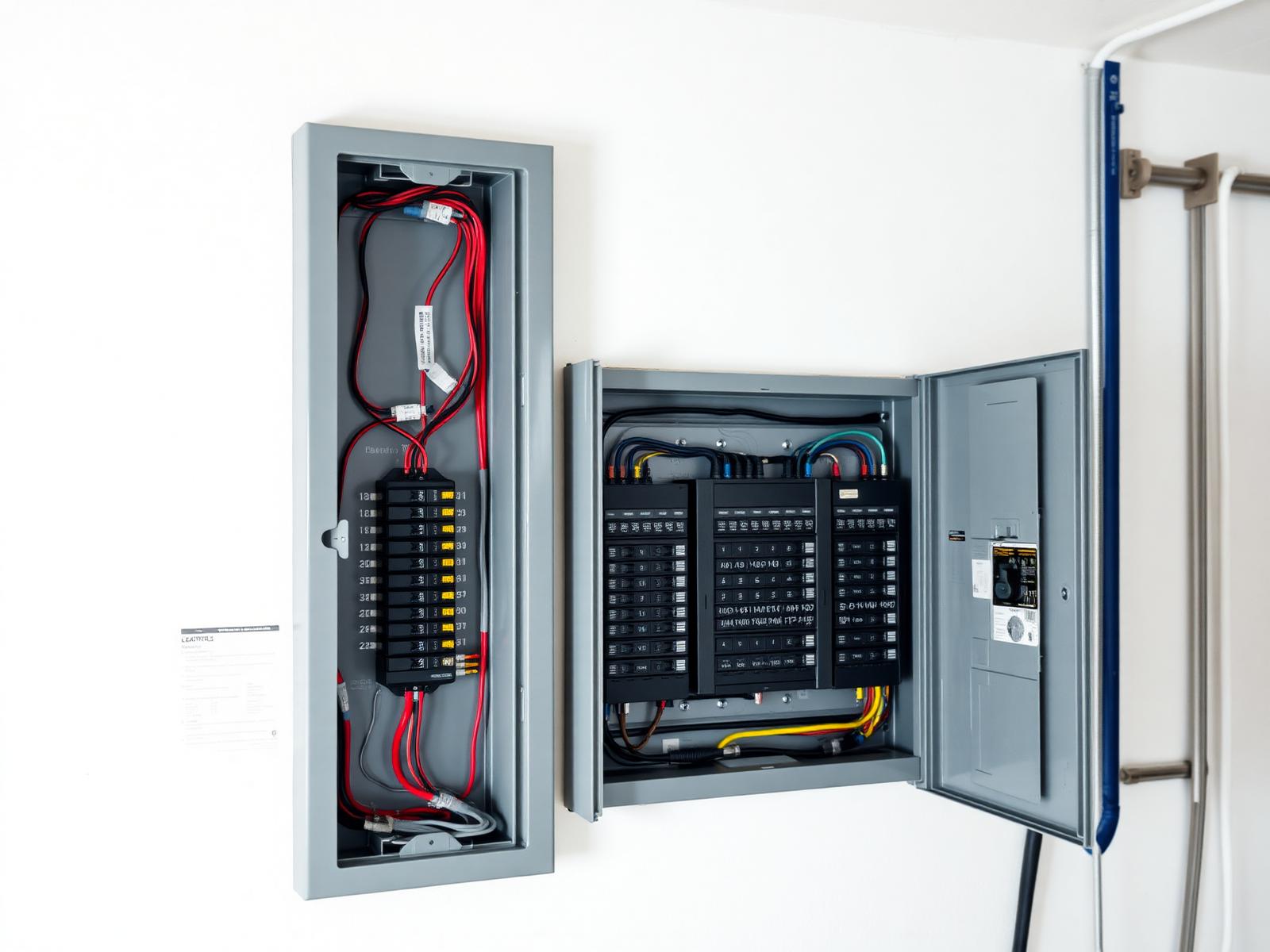
200 Amp Panel Upgrade Cost by Region
Regional labor rates are the single biggest swing factor. A 200 amp panel job that costs $2,100 in suburban Indianapolis costs $4,800 in San Francisco for identical work and identical materials. Average all-in pricing by metro for 2026:
| Region | Typical Range | Average |
|---|---|---|
| San Francisco / Bay Area | $3,800 – $5,500 | $4,400 |
| New York / NJ Metro | $3,500 – $5,200 | $4,100 |
| Boston | $3,200 – $4,800 | $3,800 |
| Los Angeles | $2,800 – $4,500 | $3,400 |
| Seattle | $2,600 – $4,200 | $3,200 |
| National Average | $1,800 – $4,500 | $2,800 |
| Chicago | $2,200 – $3,800 | $2,700 |
| Atlanta | $1,900 – $3,200 | $2,400 |
| Dallas / Houston | $1,800 – $3,000 | $2,300 |
| Indianapolis / Columbus | $1,600 – $2,800 | $2,100 |
What Your Quote Should Itemize
A complete 200 amp panel upgrade quote breaks down into roughly seven line items. If your quote is one round number, ask for the breakdown — it makes comparison across electricians possible and exposes padding:
- 200 amp panel and breakers: $400–$800 (Square D Homeline, Eaton BR, or Siemens PowerMod are the common choices).
- Main labor (5–7 hours): $700–$1,800 depending on region.
- Permit: $100–$500 (jurisdiction-dependent).
- Utility disconnect/reconnect: $0–$300.
- Grounding system inspection and upgrade: $150–$400.
- Meter base/socket replacement (often required): $200–$600.
- AFCI/GFCI breakers for required circuits: $40–$60 each, typically 6–15 breakers.
Hidden Costs That Push Quotes to $5,000+
- Service entrance cable replacement: $500–$1,500. If the cable from your meter to your panel is undersized for 200 amps, it must be replaced — non-negotiable.
- Service mast and weatherhead: $400–$900 for overhead service drops.
- Underground service upgrade: $1,500–$4,000 if your utility feed is buried and undersized.
- Drywall repair: $200–$600. Most electricians do not patch.
- Knob-and-tube discovery: $1,000–$5,000 to remediate, common in homes built before 1950.
2026 Rebate Stack: Knock $1,000–$4,000 Off the Total
The 2026 federal rebate landscape is the best it has ever been for panel upgrades. Three buckets that often stack:
- HEEHRA rebate (income-qualified): Up to $4,000 toward the panel itself when the upgrade enables electrification. 100% for households under 80% of area median income; 50% for 80–150% AMI.
- 25C federal tax credit: 30% of cost up to $600 per year when paired with qualifying heat pump, heat pump water heater, or induction range install.
- State and utility rebates: $500–$2,000 in MA, CA, NY, WA, CO, and IL. Check dsireusa.org for your exact ZIP.
Common Red Flags in Quotes
- Quotes without an on-site visit. Phone and email quotes always come in low and balloon on install day.
- "Homeowner pulls the permit." The electrician should pull the permit in their license. Otherwise liability shifts to you.
- No mention of the meter base. If your meter base is original and undersized, it must be replaced. A quote that doesn't address it will be revised upward.
- Cash-only or large upfront deposits. 10–25% deposit is normal; 50%+ is not.
- No written warranty. Standard is 5–10 years labor plus manufacturer panel warranty.
How to Get Three Comparable Quotes
Use the same brief with every electrician so the quotes are actually comparable:
- Existing panel size, brand, and approximate age
- Number of circuits currently in use
- Planned new loads (EV charger, heat pump, hot tub, etc.)
- Overhead or underground service
- Whether drywall repair is included
- Whether meter base and service cable replacement are included or quoted separately
With this brief, three on-site quotes from licensed electricians should land within 25% of each other. Outliers in either direction are worth a follow-up question.
Frequently Asked Questions
How much does a 200 amp panel upgrade cost in 2026?
A 200 amp panel upgrade costs $1,800 to $4,500 in 2026, with the national average at $2,800. Coastal metros like San Francisco, Boston, and New York run $3,500–$5,500. Midwest and southern markets like Atlanta, Dallas, and Indianapolis run $1,800–$3,200. The price includes the new panel, breakers, labor, permit, and utility coordination, but does not include service entrance cable replacement, drywall repair, or sub-panel additions.
How long does a 200 amp panel upgrade take?
The physical install takes 4 to 8 hours, with the home's power off for most of that time. From contract signing to final inspection, plan for two to four weeks: the electrician needs to pull the permit, coordinate with the utility for disconnect and reconnect, do the install, and schedule the municipal inspection. Most contractors complete the install in a single day.
Will a 200 amp panel support an EV charger?
Yes, in most cases. A Level 2 EV charger draws 30–50 amps. A 200 amp panel typically has 60–100 amps of headroom after baseline household loads (HVAC, water heater, range), which is enough for one and often two Level 2 chargers. Whether you can run two simultaneously depends on your specific load profile — a load calculation by your electrician is a $100–$200 add-on that's worth doing before you commit to dual chargers.
Do I need a 200 amp panel if I don't have an EV?
If your existing 100-amp panel handles your loads without breakers tripping, no — but most homes built before 1990 with a 100-amp panel are running near capacity already. A 200 amp upgrade is worth it preemptively if you're planning a heat pump, induction range, hot tub, workshop, or solar in the next 5 years, or if your panel is a Federal Pacific or Zinsco (which are uninsurable in many states regardless of amperage).
Is it cheaper to upgrade to 200 amp now or wait?
Now. The 2026 IRA rebate window (up to $4,000 for income-qualified households, 30% tax credit up to $600 for everyone else) is currently scheduled through 2032 but has faced annual political pressure. Material costs for copper wire and panel hardware have risen 18% since 2023 and most forecasts expect continued increases. The job is roughly $400–$700 cheaper today than it will be in 2028.