
Closet Organization: Elfa vs IKEA Pax, Capsules & Layouts
Closets fail more often than any other organized space in the house — usually because the system was built around the clothes a person owns, not the clothes they actually wear. Below — the three systems professional organizers recommend (Elfa, IKEA Pax, custom), the hanging vs folding rules that hold up, and capsule wardrobe logic that makes a smaller closet feel larger than a stuffed walk-in.
Updated May 2026 · 10 min read
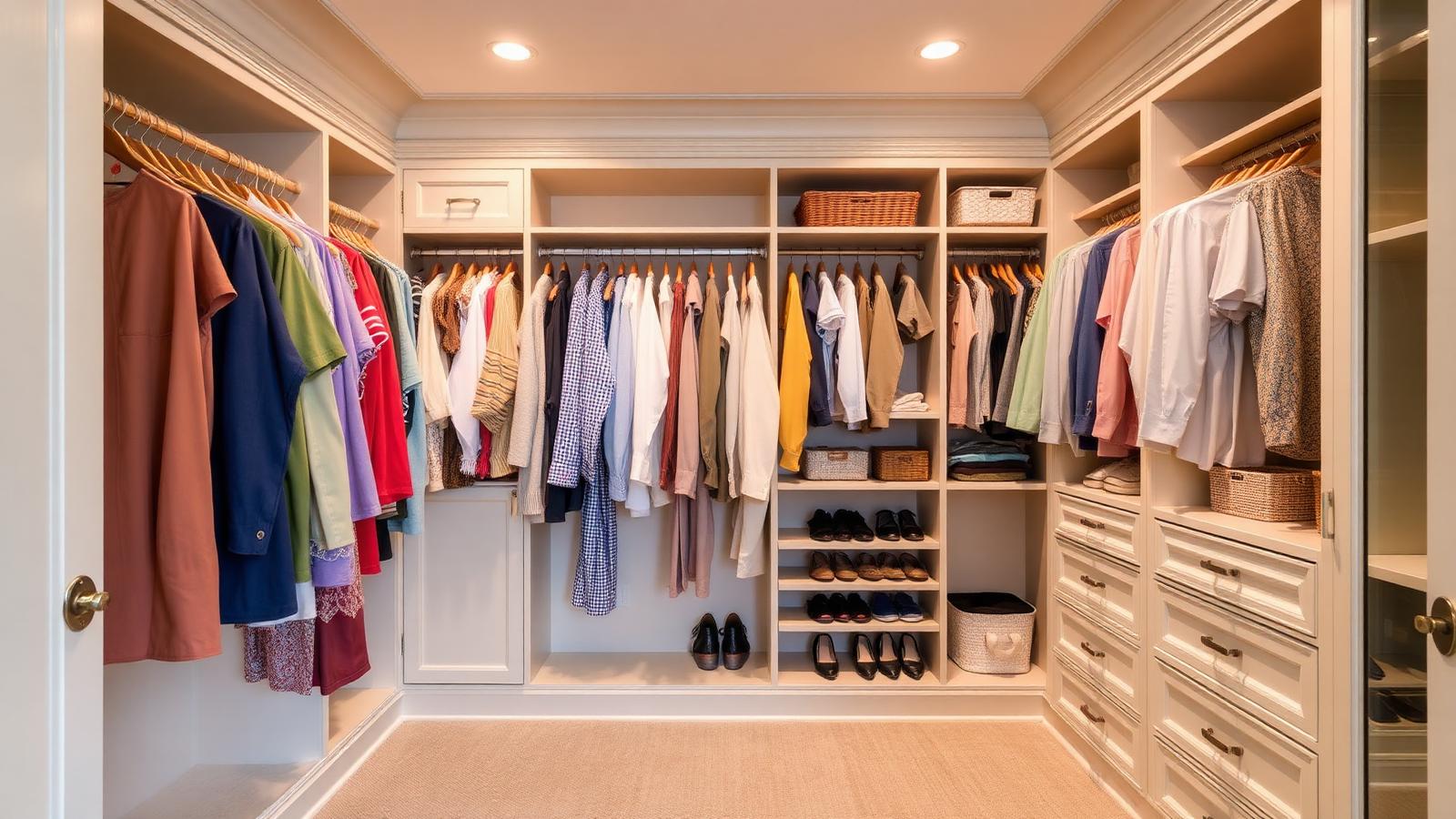
The closets that work share one move: matching hangers throughout. It costs $40 and immediately makes any closet look cohesive.
Start Here: Declutter First, System Second
Every minute spent organizing clothes you don't wear is wasted. Pull everything out, sort into keep / donate / repair / sell, and only put back what earned its place. The 80/20 rule applies — most people wear 20% of their clothes 80% of the time. Build the system around that 20%, and store the rest accessibly (not invisibly).
The Three Closet Systems Worth Buying
Elfa (Container Store) — Most Adjustable
Wall-mounted track system. Every shelf, drawer, and rod hangs from the track and slides to any position. Best for: rented spaces (the track is one wall screw per stud, easy to patch), wardrobes that change seasonally, and oddly shaped closets. Cost: $1,200–$4,000 for a typical walk-in. Container Store runs a 25–30% Elfa sale twice a year — never pay full price.
IKEA Pax — Best Value
Modular wardrobe frames with interior fittings (rods, drawers, shelves, shoe racks) configured to your needs. Best for: fixed-depth walk-ins and reach-ins, owners committed to the layout for 5+ years, anyone who can install flat-pack furniture. Cost: $800–$2,500 for a primary closet. Add KOMPLEMENT drawers ($60 each) and a glass front for the built-in look.
Custom Millwork — Best Integration
A local cabinet shop builds floor-to-ceiling closet cabinetry with hidden hardware, integrated lighting, and finishes that match the bedroom. Best for: forever homes, primary suites where the closet is visible from the bedroom, and anyone who hates flat-pack assembly. Cost:$5,000–$15,000+ for a walk-in.
Hanging vs Folding: The Rules That Hold Up
Hang: button-downs, blouses, dresses, blazers, structured pants, silk, anything that wrinkles, anything worn weekly.
Fold: sweaters (hanging stretches the shoulders permanently), denim, t-shirts, athletic wear, pajamas, swimwear.
Drawer-roll: socks, underwear, scarves. Konmari-style vertical folding works for t-shirts too if drawers are shallow.
The Reach-In Closet Playbook
- Double-hang the bottom section. One rod at 80", second at 40" — doubles hanging capacity for shirts and folded-over pants.
- Slim 4-drawer dresser inside the closet. Frees the bedroom dresser-top, keeps folded items hidden.
- Top-shelf bins for seasonal swap, sweaters, and overflow.
- Over-door hooks or shoe rack for bags, belts, or daily-rotation shoes.
- Skip floor bins in tight reach-ins — they block access more than they store.
The Walk-In Closet Playbook
- Hanging on three walls if depth allows; folded storage in the middle island or one short wall.
- Drawers for jewelry and watches — felt-lined inserts are worth the $40.
- Open shoe shelving at eye level for daily-rotation pairs; bins or boxes for the rest.
- A real mirror, full-length, with light from both sides (sconces or LED strips at the frame).
- One bench or stool for sitting while changing — small, but daily-use.
- Lighting at three layers: overhead, in-cabinet LED tape, and a single decorative pendant if ceiling height allows.
Capsule Wardrobe Logic
A working capsule is 30–40 pieces in a cohesive palette where any top works with any bottom (excluding outerwear, workout gear, and special-occasion pieces). It's not a minimalist purity test — it's a system that makes a smaller wardrobe feel larger because every combination works.
- Pick a base palette (neutrals + 1–2 accent colors).
- Two-thirds basics, one-third statement pieces.
- Replace, don't add. One in, one out, ruthlessly.
- Seasonal swap twice a year — out-of-season pieces go to a bin on the top shelf or under-bed storage.
Hangers: The Single Highest-ROI Purchase
Matching velvet hangers cost $40 for a set of 100 and do three things at once: make the closet look immediately cohesive, save 1–2 inches per garment versus chunky wood hangers, and stop tops from sliding off. Wood hangers belong in entryway closets and on suits; velvet wins everywhere else.
Shoe Storage Inside the Closet
Three approaches that work — see also our full shoe storage guide:
- Open shoe shelves at eye level for daily pairs (8–12 pairs).
- Clear shoe boxes stacked on top shelf for occasional pairs.
- Over-door hanging organizer for flats and sneakers in tight reach-ins.
What People Get Wrong
- Buying the system before culling. You'll build storage for clothes you donate within the year.
- Mismatched hangers. Single biggest visual upgrade most closets need.
- Folding sweaters on hangers. Shoulder bumps within 6 months.
- Floor-stacked piles "to deal with later." They become the system.
- Closet rod at builder height. 80" up, with second rod or shelves below, almost always beats a single 65" rod.
The Quarterly Closet Reset
- Pull anything you haven't worn in 6 months to a separate pile.
- For each piece: keep, donate, repair, or sell. No "maybe" pile.
- Re-hang remaining clothes in a consistent order (jackets → blouses → tops → dresses → pants → skirts), by color within each category.
- Wipe shelves and drawers.
- Note any gaps (need black trousers, missing a winter coat) before next shopping trip.
Budget Tiers
- $80–$250 (DIY refresh): matching hangers, drawer dividers, 4–6 closet bins, a small under-shelf basket.
- $800–$2,500 (IKEA Pax full install): 2–4 Pax frames, KOMPLEMENT interior fittings, soft-close drawers, a mirror.
- $1,200–$4,000 (Elfa system): wall-mounted track, mesh drawers, ventilated shelving, accessory hooks.
- $5,000–$15,000 (custom millwork): built-ins with hidden hardware, integrated LED lighting, jewelry drawers, glass-front cabinets.
Keep Reading
Frequently Asked Questions
Elfa vs IKEA Pax vs custom — which closet system should I buy?
Elfa (Container Store) is the most adjustable — every component moves on a wall track, ideal if your wardrobe changes seasonally or you rent. IKEA Pax is the best value for a fixed walk-in or reach-in with consistent depth. Custom millwork wins on integration, hidden hardware, and resale value but costs 4–8x what IKEA Pax does. Most households end up with Pax in a primary closet and Elfa in a secondary one.
What's the rule for hanging vs folding clothes?
Hang anything that wrinkles (button-downs, dresses, blazers, structured pants, silk) and anything you wear weekly enough to want visible. Fold sweaters (hanging stretches the shoulders), denim, t-shirts, and athletic wear. Roll for travel only — not daily storage. The functional rule: if you can find it folded in under 5 seconds, fold it. If not, hang it.
How do I organize a small or reach-in closet?
Three moves: double-hang the bottom section (one rod for shirts, one below for pants folded over the hanger — doubles the hanging capacity in 60 inches of vertical space); add a slim 4-drawer dresser inside the closet to free dresser-top surfaces in the bedroom; use over-the-door hooks or a shoe rack for accessories. Skip floor-level bins in tight reach-ins — they block access.
Should I do a capsule wardrobe?
Yes if you spend more than 5 minutes deciding what to wear most mornings, struggle to pack for trips, or own clothes you haven't worn in a year. A working capsule is 30–40 pieces (excluding outerwear, workout, and special occasion) in a cohesive palette where any top works with any bottom. It's not minimalism — it's a system that makes a smaller wardrobe feel larger.
How much does a closet redo cost?
Three tiers: DIY refresh with new hangers, drawer dividers, and a few organizers runs $80–$250. A full IKEA Pax install for a primary closet lands at $800–$2,500 in materials. Elfa systems run $1,200–$4,000 depending on size and accessories. Custom millwork from a local cabinet shop is $5,000–$15,000+ for a walk-in. The single highest-ROI purchase is matching velvet hangers — they cost $40, make every closet look immediately cohesive, and prevent shoulder-stretching.
How do you keep a closet organized?
Three habits: (1) the 'one in, one out' rule on every new clothing purchase; (2) a seasonal swap twice a year — pull out-of-season pieces to a separate area; (3) a quarterly 'haven't worn in 6 months' pass to donate. The closets that fail are the ones treated as static storage; the closets that work are treated as rotating systems with quarterly maintenance.