
Shoe Storage Ideas: 22 Solutions for Entryways, Closets & Small Spaces
Shoes pile up faster than any other category in the house — at the door, in the closet, under the bed. This guide is 22 storage solutions for every space and budget, the 80/20 culling rule that makes every system work better, and the brand picks that survive daily use.
Updated May 2026 · 10 min read
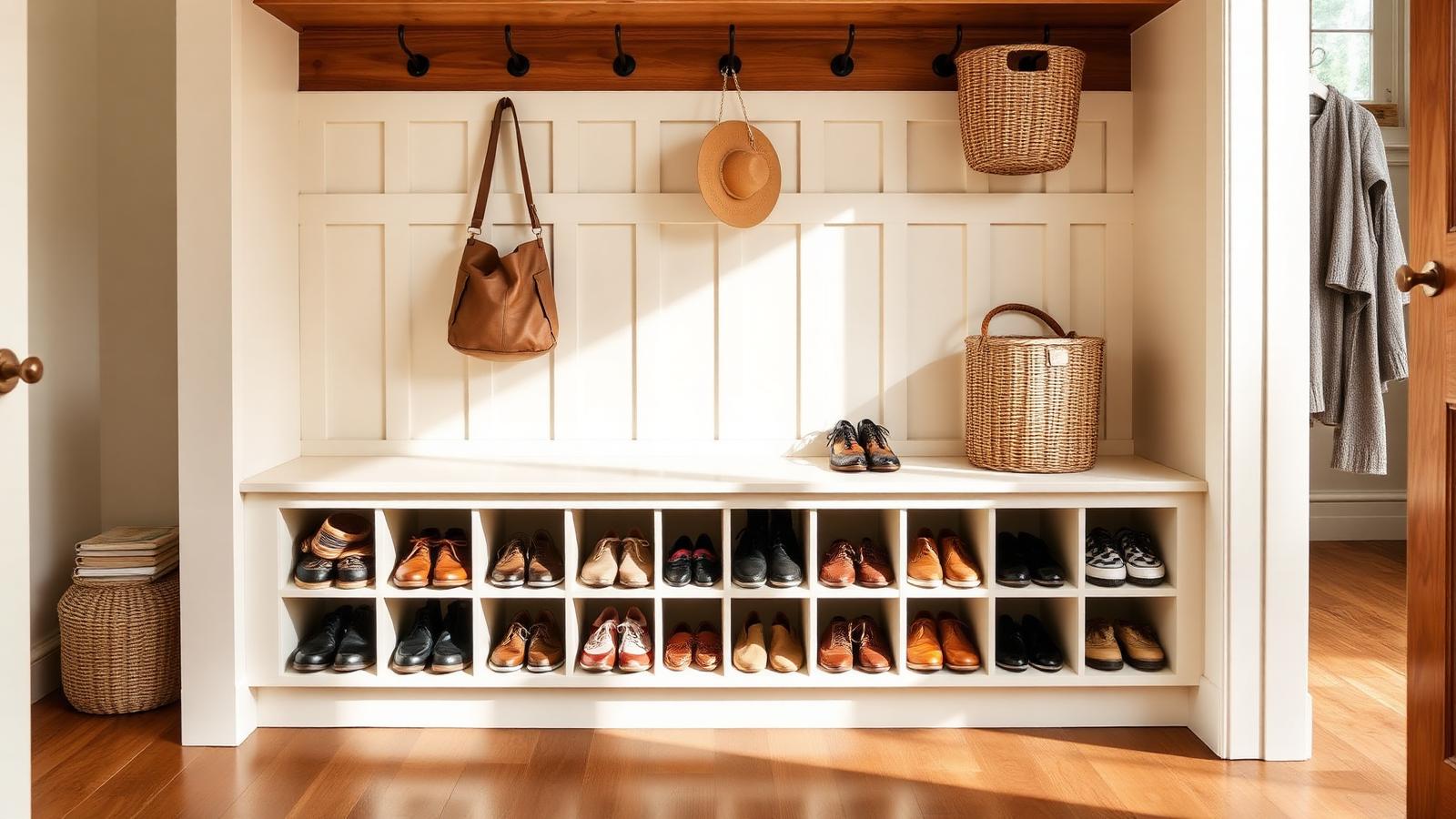
The most-used shoes belong at the entryway in cubbies or a bench; the rest belong in the primary closet — not both.
Start by Culling — The 80/20 Rule
Before buying any storage, sort every shoe in the house into three piles: weekly rotation (worn in the last 30 days), seasonal rotation (worn this season but not weekly), and haven't worn in a year. The last pile leaves the house. Most adults end the cull with 8–14 pairs in active rotation per person — and any storage system works twice as well at half-capacity.
Split Storage by Use, Not by Type
The single biggest mistake: trying to store all of one person's shoes in one place. Instead:
- Entryway / mudroom: only the 4–6 pairs each person wears this week.
- Primary closet floor: rest of this season's rotation.
- Top shelf / under bed: off-season and special-occasion shoes in labeled drop-front boxes.
22 Solutions by Space
Entryway & Mudroom (Daily Rotation)
- Slim tilt-out shoe cabinet. 12 inches deep, IKEA Bissa or Hemnes — 12–18 pairs in a 4' wide footprint. Best for tight entries.
- Bench with open cubbies. One cubby per family member, top doubles as a seat. Best for families and mudrooms.
- Bench with baskets underneath. Two large woven baskets toss-in style — fastest to use, hides mess.
- IKEA Trones stack. Wall-mounted tilt-out cabinets, stackable two- or three-high. Floats off the floor for easy cleaning.
- Floating shoe shelf. Wall-mounted shelf 8 inches off the floor for a clean line and easy sweep underneath.
- Open metal shoe rack. Cheapest functional option ($25–$50), works under a console table.
- Built-in bench with locker uprights. The mudroom dream: bench, cubbies below, hooks and shelf above, one column per person.
Primary Closet (Season Rotation)
- Two-tier metal shoe rack on the floor. Holds 12–16 pairs in 36 inches of width.
- Pull-out shoe shelves (Elfa, Pax). Best of the best — sliding metal shelves angled to display each pair.
- Hanging shoe rod organizer. 6–12 fabric pockets that hang from the closet rod.
- Cubby tower (Kallax 4x4). 16 cubbies, baskets or open. Doubles as a closet partition.
- Over-the-door clear pocket organizer. Best for flats, sandals, and kids' shoes only.
- Wall-mounted vertical shoe display. Like a sneakerhead's wall — best for boots and statement shoes.
Small Spaces & Apartments
- Under-bed drop-front boxes. Clear, stackable, pull from the bottom without unstacking.
- Bottom-of-closet shoe organizer with wheels. Pull out to choose, slide back in.
- Inside-closet-door rack. Wire racks screw to the inside of a closet door, holds 8–10 pairs.
- Skinny gap shoe stand. 6"–10" wide, fits between a wall and a sofa or fridge.
- Bench-storage-ottoman combo. Lift-top ottoman holds a season's worth of shoes and seats two.
For Kids & Families
- Color-coded baskets, one per kid. Toss-in, no organization required.
- Wall-mounted boot tray with drip rail. For snowy and rainy regions — protects floors.
- Hanging closet shelves (sturdy, fabric). One shelf per kid, height-adjustable as they grow.
- Mudroom locker with bottom shoe drawer. Drawer pulls out, kids drop shoes in, drawer slides shut.
The Best Brands
- IKEA Bissa, Hemnes, Trones. The default for slim entryway cabinets — well under $100.
- Elfa (Container Store). Best closet system, fully customizable, lifetime quality.
- mDesign & Whitmor. Best clear over-door pocket organizers — reinforced seams.
- Simplehouseware. Affordable metal racks that don't bow under weight.
The Weekly Reset (3 Minutes)
- Return last week's seasonal shoes from the entryway to the closet.
- Move this week's rotation from the closet to the entryway.
- Wipe down the entryway floor or boot tray.
Frequently Asked Questions
What is the best shoe storage for a small entryway?
For entryways under 4 feet wide, the best shoe storage is a slim shoe cabinet with tilt-out drawers (IKEA Hemnes, Bissa, or similar) — 12 inches deep, holds 12–18 pairs, doubles as a console for keys and mail. Runner-up: a low bench with two woven baskets underneath for active-rotation shoes only, with the rest stored in the closet. Avoid open cubby shelves in tight entryways — they look cluttered the moment shoes go in.
How do I store shoes in a small closet?
Use vertical space and one bin per category. On the floor: a two-tier metal shoe rack ($25) or a 6–12 pocket hanging organizer over the rod. On the door: a clear over-door shoe organizer (24 pockets) — best for flats, sandals, and kids' shoes. On the top shelf: original boxes for special-occasion shoes you wear less than once a month. Reserve floor space only for shoes worn weekly.
How many shoes should one person actually keep?
Most people wear 20% of their shoes 80% of the time. A functional rotation for one adult is typically 8–14 pairs: 2 sneakers, 2 boots (one casual, one weather), 2 dress shoes, 1 sandal, 1 athletic, 1 house shoe, 1 specialty (hiking, formal). If you can't name the last time you wore a pair, it's a donation candidate — culling first makes any storage system work twice as well.
Are over-the-door shoe organizers worth it?
Yes for flats, sandals, kids' shoes, and household items (the pockets are great for cleaning supplies, hats, and small toys too). No for adult sneakers, boots, or dress shoes — they sag, slip out, and stretch the door. The best ones are clear PVC with reinforced seams (Whitmor, mDesign, ClosetMaid) and have 24 pockets. Use the metal hooks that come with them, not adhesive — adhesive fails within months on most door finishes.
What's the best shoe storage for a mudroom?
A built-in or freestanding bench with open cubbies underneath, one cubby per family member, plus a top rail of hooks for bags and a top shelf for baskets (gloves, hats, dog leashes). For under $300: IKEA Trones cabinets stacked two-high along the wall — each holds 4–5 pairs and the closed front hides daily mess. For a built-in look without carpentry: a Kallax shelf turned on its side with baskets in alternating cubbies.
How do I store seasonal shoes I'm not currently wearing?
Use clear plastic drop-front bins (The Container Store and Amazon both sell them for $5–$12) stacked on a closet's top shelf or under a guest bed. Drop-front access means you can pull a box from the bottom of a stack without unstacking. Label each box with a Sharpie or removable label. Skip cardboard original boxes for long-term storage — they absorb humidity and stain leather.