
Fridge Organization: The Complete 2026 Guide
Most fridge-organization guides show you a beautiful "after" photo and skip the part where it falls apart in two weeks. This one is built around the system that actually holds — temperature zones, the bins that survive a year, and a 10-minute weekly reset that takes less time than putting groceries away the lazy way.
Updated May 2026 · 8 min read
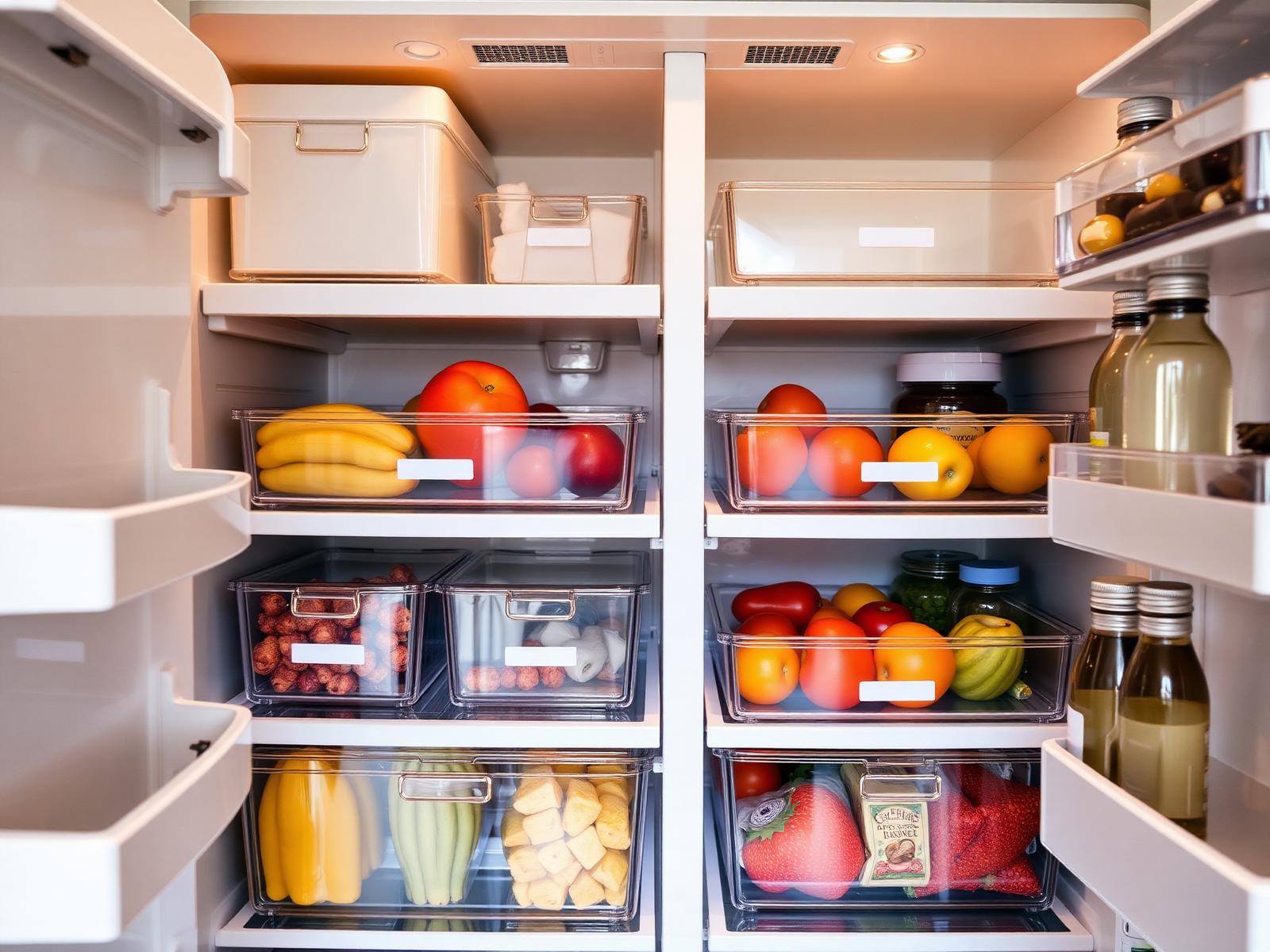
The look most people want: clear bins, grouped categories, and nothing pushed to the back where it dies.
The single biggest mistake in fridge organization isn't using the wrong bins or skipping labels — it's organizing by food group instead of by temperature. A fridge is not a uniform cold box. There's a 7°F swing between the top of the door and the back of the bottom shelf, and that difference decides whether your milk lasts a week or three days.
The Fridge Zone Map
Every modern fridge has the same five zones, regardless of brand. Knowing what belongs where is 80% of the system:
- Top shelf (warmest, ~40°F) — leftovers, drinks you want grab-and-go, ready-to-eat foods like yogurt and hummus.
- Middle shelf (~38°F) — dairy, eggs in their carton, deli meats, soft cheeses.
- Bottom shelf (coldest, ~34°F) — raw meat, poultry, and fish on a tray. Lowest so drips can't contaminate anything below.
- Crisper drawers — produce only, split by humidity (more on this below).
- Door (warmest of all, ~42°F) — condiments, jams, butter, beverages. Never milk, never eggs, never raw meat.
The Two-Drawer Produce Rule
Most fridges have two crisper drawers with adjustable humidity vents — and most people never touch the vents. Here's the rule that doubles produce shelf life:
- High-humidity drawer (vent closed) — anything that wilts: leafy greens, herbs, broccoli, cucumbers, peppers, asparagus, green beans.
- Low-humidity drawer (vent open) — anything that rots from ethylene gas: apples, pears, stone fruit, grapes, avocados, ripe melons.
Mixing the two is why your spinach turns to slime three days after grocery day — the apples next to it are gassing it to death.
Bins That Actually Survive a Year
The fridge-organization aisle is full of bins that crack within months. After testing dozens of brands across organization communities, three consistently last:
- iDesign Linus (BPA-free polypropylene) — the workhorse. Reinforced rims, dishwasher-safe, $8–$15.
- OXO Good Grips Smart Seal — best for produce; the lid has an adjustable vent that mimics the crisper drawer principle.
- mDesign Plastic Storage Bins — widest size range; what most professional organizers default to.
Avoid: unbranded acrylic sets from Amazon under $20 for 6 (they crack at the cold back wall), bamboo or wood inserts (warp from moisture), and anything with a built-in egg tray (the door is the wrong place for eggs anyway).
The 10-Minute Weekly Reset
The reason most organized fridges fall apart in two weeks isn't bad bins — it's the absence of a reset routine. Do this once a week, ideally the night before your grocery run or delivery:
- Minute 1–2: Pull the leftovers shelf forward. Anything older than four days goes in the trash or freezer.
- Minute 3–4: Pull the produce drawers. Anything past its prime gets cooked tonight or composted.
- Minute 5–7: Wipe one shelf (rotate through all shelves over the month) with a vinegar-water spray.
- Minute 8–9: Consolidate condiments — empty jars to recycling, similar items grouped together.
- Minute 10: Pull everything still good toward the front so it gets used first. Now there's room for the new groceries.
The 16-Item Shopping List
Built for a standard 18–25 cu ft top-freezer, French-door, or side-by-side fridge. Total spend: roughly $80–$150 depending on brand mix.
- Two large clear bins for the top shelf (leftovers + drinks)
- One medium bin labeled "eat first" for produce on its last day
- Two narrow bins for yogurt and snack cups
- One egg-carton-sized bin for the middle shelf (keep eggs in their carton inside it)
- One deli-meat and cheese bin with a clear lid
- One raw-meat tray for the bottom shelf (any rimmed sheet pan works)
- Two produce bins with vented lids (OXO Smart Seal recommended)
- A lazy Susan for condiment jars in the back of the middle shelf
- A can/bottle organizer for the door or top shelf
- Reusable silicone freezer bags (Stasher or Zip Top)
- A pack of removable bin labels and a chisel-tip marker
- A $10 appliance thermometer
- An open box of baking soda (replace monthly)
- Tall glass jar for herb storage (mason jar works)
- Microfiber cloth and a small spray bottle of vinegar-water (1:1) for the weekly wipe
- One under-shelf wire basket if your fridge has tall gaps between shelves
Common Mistakes to Avoid
- Storing milk in the door. The door is the warmest spot — milk lasts 3–4 days less there than on the middle shelf.
- Washing berries before storage. Moisture is what makes them rot. Wash right before eating.
- Stacking bins so the back ones are unreachable. If you can't see it, you won't use it. Single layer only.
- Putting hot leftovers straight in. They raise the ambient temperature and risk every other item. Let them cool to room temp for 20 minutes first.
- Over-filling. Air needs to circulate. A 75%-full fridge runs more efficiently and keeps food fresher than a 100%-full one.
- Refrigerating tomatoes. Cold kills tomato flavor and texture. They belong on the counter unless they're already cut.
Does Fridge Organization Actually Save Money?
The USDA estimates the average American household throws away roughly $1,500 of food per year, and a meaningful chunk of that is fridge waste — produce forgotten in the crisper, leftovers pushed to the back. A working organization system combined with the weekly reset routine typically cuts household food waste by 30–40%, which pays back the $80–$150 setup cost within two to three months.
Frequently Asked Questions
What is the best way to organize a fridge?
Organize your fridge by temperature zone, not by food group. The top shelf is the warmest and best for ready-to-eat foods and leftovers. The middle shelf is for dairy and eggs (despite the door bins many fridges include — the door is the warmest part). The bottom shelf is coldest and is where raw meat, poultry, and fish belong, ideally on a tray to catch drips. Crisper drawers should be split: one for high-humidity produce (leafy greens, herbs) and one for low-humidity (apples, pears, stone fruit). The door is for condiments and beverages only.
Are clear fridge organization bins actually worth it?
Yes, but only if you buy the right ones. Clear bins solve three real problems: they group like items so you stop losing things at the back, they contain spills, and they make wiping the shelf a 10-second job instead of unloading everything. The bins that actually last are BPA-free acrylic or PET with reinforced rims (mDesign, iDesign Linus, and OXO Good Grips are the most-recommended brands). Skip the cheapest unbranded sets — they crack within a year, especially in cold-zone shelves.
How often should I clean and reorganize my fridge?
Do a 10-minute reset weekly (the night before grocery delivery is ideal): toss expired items, wipe one shelf, consolidate leftovers, and pull anything older than four days forward. Do a full deep clean — empty everything, remove shelves, wash with warm soapy water — every three months, or immediately if anything spills or spoils. Replace baking soda monthly.
Where should eggs go in the fridge?
On the middle shelf, in their original carton — not in the door. The door is the warmest part of the fridge and temperature fluctuates every time it opens, which shortens egg shelf life. The original carton also protects eggs from absorbing fridge odors through their porous shells. This applies to American grocery-store eggs; in countries where eggs are unrefrigerated, this rule doesn't apply.
What's the right temperature for a fridge?
The FDA recommends 40°F (4°C) or below for the fridge and 0°F (-18°C) for the freezer. The food-safety sweet spot is actually 37°F — cold enough to slow bacterial growth meaningfully but not so cold that produce freezes against the back wall. If you don't trust your fridge's built-in display, a $10 appliance thermometer placed on the middle shelf will tell you the truth.
How do I keep produce fresh longer?
Three rules. First, sort by humidity: leafy greens and herbs in the high-humidity drawer (vent closed), apples and stone fruit in low-humidity (vent open) because they release ethylene gas that ripens neighbors. Second, don't wash produce until you use it — moisture accelerates rot. Third, store herbs upright in a jar with an inch of water and a loose plastic bag over the top, like cut flowers. Done well, parsley and cilantro stay fresh for two to three weeks.