
Spice Rack Organization: 14 Systems That Make You Cook Faster
A good spice system cuts cooking time noticeably — no more crouching to read jar labels or buying a third bottle of cumin because you couldn't find the first two. Here are 14 organization systems for every kitchen layout, the labeling approach that beats alphabetizing, and the jars worth buying.
Updated May 2026 · 8 min read
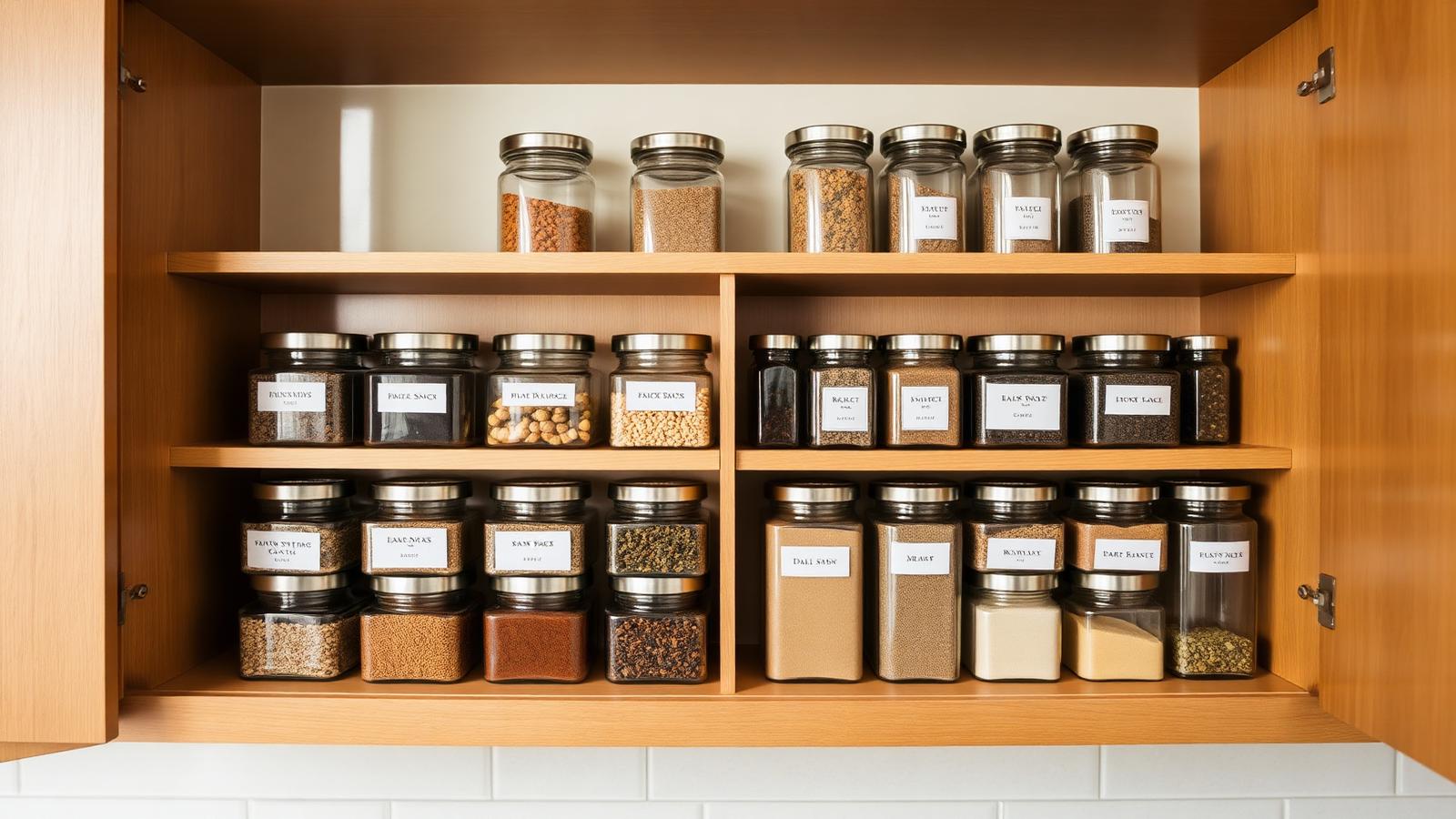
Three rules: every jar visible, all jars matching, labels on top for drawers and front for shelves.
The Three Rules Before You Buy Anything
- Cull first. Most kitchens have 30+ spices and use 15. Smell each one in your palm — if there's no aroma, it's flavorless. Toss anything older than 18 months.
- Pick a single jar size and shape. Uniform jars pack tighter, read as a set, and stay organized longer. Mixed jar shapes always slide into chaos.
- Group by use, not alphabet. Daily-use zone, baking zone, cuisine zones. Alphabetizing forces you to read every label.
14 Systems by Kitchen Layout
In a Drawer (Best Overall)
- Bamboo tiered drawer insert. Three-level riser, labels facing up. Holds 30+ jars in one standard drawer.
- Acrylic stepped insert with custom-fit lip. Cleaner look than bamboo, but slick — keeps jars from sliding when the drawer closes hard.
- DIY drawer dividers + flat-top jars. Cheapest pro look: $8 of bamboo separators + 24 jars.
- Magnetic drawer base. Metal-bottomed jars stick directly to a steel sheet at the drawer bottom. Holds during fast pulls.
On a Wall (Best for Renters & Small Kitchens)
- Magnetic strip wall. A 24" magnetic bar + 24 round metal tins. Mounts with screws or 3M strips. No cabinet space needed.
- Magnetic refrigerator side. Same tins, free wall — sticks directly to the side of the fridge.
- Wall-mounted floating shelves. Two slim 24" shelves, 4-oz round jars in a single row.
- Pegboard wall with shelves. Adjustable, doubles as utensil storage.
In a Cabinet
- Tiered cabinet riser (3 levels). The minimum-effort upgrade — turns a single shelf into three visible rows. $15 from Amazon.
- Pull-out cabinet caddy. Slides out of a base cabinet — best for narrow gaps between fridge and counter.
- Lazy Susan turntable. Two-tier rotating tray for a corner cabinet. Spin to find.
- Inside-cabinet-door rack. Adhesive or screwed wire rack — reclaims dead space, holds 10–14 jars.
On the Counter (For Cooks Who Use Many Spices Daily)
- Stepped countertop riser. Acacia or walnut riser sized to a backsplash, holds 16–20 jars in three rows.
- Rotating carousel rack. Pre-filled rotating racks (Olde Thompson, Kamenstein) — the classic. Pick up, spin, find.
The Labeling System That Beats Alphabetizing
Use chalk markers or printed labels with these zones (and color-coded dot stickers if you have many jars):
- Daily. Salt, pepper, garlic powder, paprika, oregano, cumin, chili flakes.
- Baking. Cinnamon, vanilla, nutmeg, allspice, ginger, cloves.
- Mexican / Latin. Cumin, chili powder, cayenne, oregano, smoked paprika.
- Italian / Mediterranean. Oregano, basil, thyme, rosemary, fennel.
- Asian. Five-spice, sesame, star anise, white pepper, Sichuan pepper.
Group the jars physically by zone, with the daily zone in the most accessible spot. When you cook tacos, you grab the whole Mexican cluster at once.
Decanting: Worth It or Not?
Decant the 15–20 spices you use weekly. Keep the rest in original bottles in a back-of-cabinet bin labeled "refills." Write the buy-date on the bottom of each decanted jar with a Sharpie so you know when to replace. Use a small funnel ($3) — it's the difference between a 5-minute refill and a 20-minute spill.
Shopping List ($25 / $60 / $120)
- $25: Three-tier bamboo cabinet riser + chalk marker for labeling original bottles.
- $60: 24 matching 4-oz square glass jars + printed top-down label sheet + small funnel.
- $120: Bamboo drawer insert + 30 matching round jars with magnetic lids + custom chalk-labeled name plates.
Frequently Asked Questions
What is the best way to organize spices?
The best spice organization shares three traits: every jar is visible (no stacking), every jar is the same size and shape (so they pack tightly and read as a set), and the labels are on the TOP for drawers and on the FRONT for shelves. The single biggest upgrade is moving spices out of a cabinet and into either a drawer with a tiered insert or a wall-mounted magnetic board — both cut spice-hunting time from 20 seconds to under 3.
Should I alphabetize my spices?
No — most professional kitchens don't. Alphabetizing sounds tidy but you have to read every label to find one spice. Better systems: (1) group by cuisine — Mexican, Italian, baking, everyday — so you grab a whole zone when you cook; (2) group by frequency — daily-use spices in the front row, special-occasion spices in the back. Both beat alphabetical for actual cooking speed.
Are decanted spice jars worth the effort?
Yes if you want a magazine-look kitchen and you cook regularly enough to refill; no if you only cook a few times a month. Pros: uniform jars pack tighter, look great, and last 5+ years. Cons: you have to refill from grocery bottles (15 minutes/month), and you need to track buy-dates somewhere because most spices lose potency at 6–12 months. The sweet spot: decant the 20 spices you use weekly and keep the rest in original bottles in a back-of-cabinet bin.
How long do spices stay fresh?
Whole spices (peppercorns, cinnamon sticks, nutmeg) last 2–4 years. Ground spices (cumin, paprika, turmeric) last 6–12 months at peak potency, 1–2 years before they're functionally tasteless. Dried herbs (basil, oregano) last only 6–12 months. Test: crush a small amount in your palm — if you can't smell it strongly, replace it. The biggest enemies are heat, light, and humidity — store away from the stove and dishwasher.
What is the best spice jar to buy?
For drawers: square 4 oz glass jars with magnetic or chalkboard labels on top (the Spicy Shelf and Amazon's Sleek Glass Spice Jars are the most-recommended). For magnetic walls: round metal tins with clear lids and magnetic backs ($20–$40 for a set of 24). For shelves: matching 4 oz round glass with shaker tops and twist seals. Avoid plastic — it stains, retains odor, and doesn't seal as well over time.
Where is the best place to store spices in a kitchen?
The single best location is a drawer near the stove with a tiered insert — labels face up, every spice visible in one glance, and your dominant hand reaches it without turning. Second best: a magnetic wall strip beside the stove (great for renters, no cabinet space needed). Third: a pull-out spice cabinet between the fridge and counter. Avoid storing spices directly above the stove — heat kills potency within months.