
Deck Ideas: Designs, Materials & Real 2026 Costs
A deck is the cheapest way to add a usable room to a home — if you build the right one. Below: the wood-vs-composite decision honestly compared, the railing and lighting moves that make small decks feel architectural, and 2026 cost ranges for every size from a 10x12 sitting deck to a 16x24 dining-plus-lounge spread.
Updated May 2026 · 10 min read
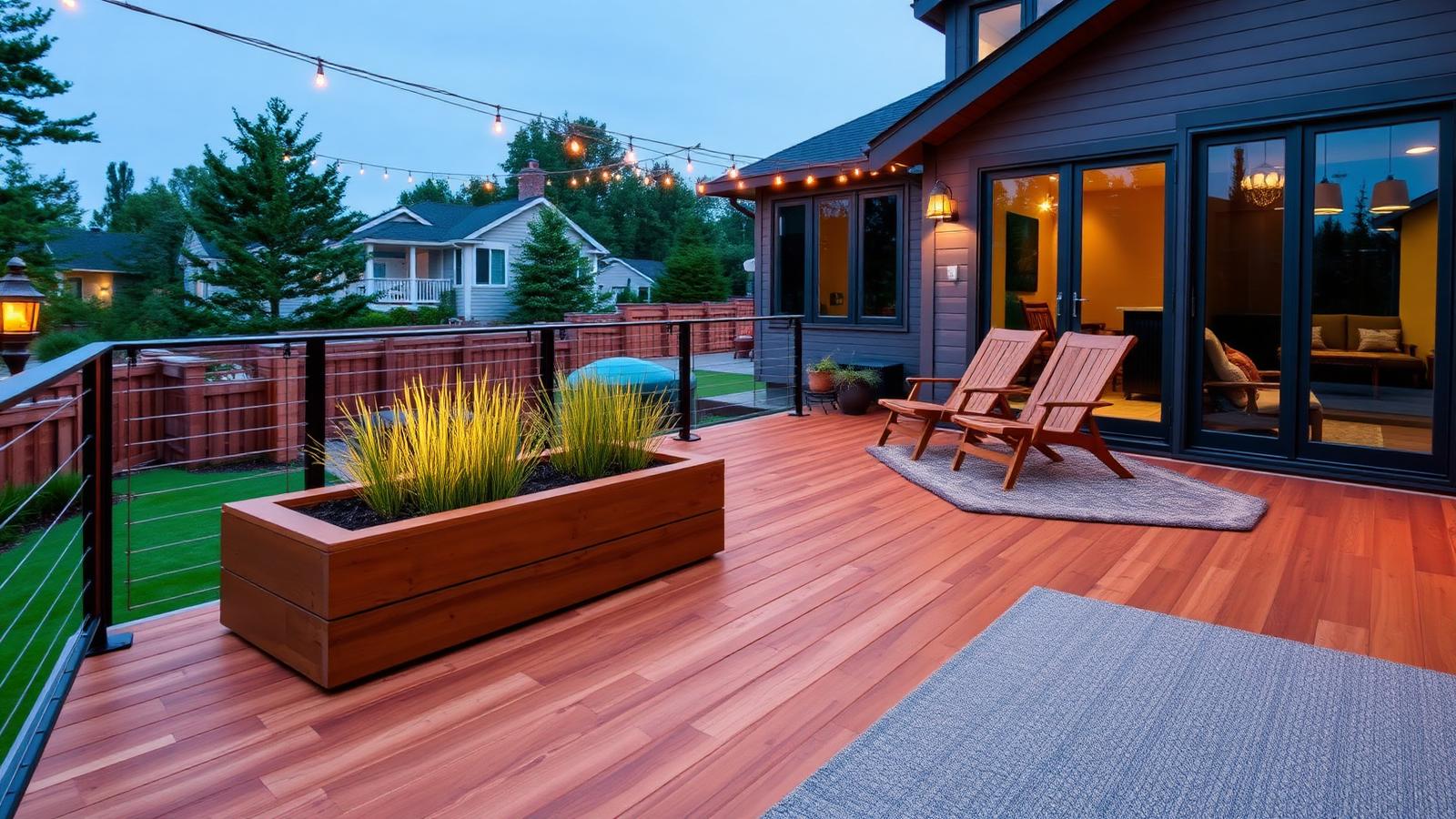
A modern cedar deck with cable railing and a built-in planter — small footprint, full outdoor room.
The Five Decisions That Drive Cost
- Material. Pressure-treated, cedar, composite, or hardwood — a 3x cost spread on the same square footage.
- Height above grade. Decks under 30" need no railing and minimal footings. Above 30" requires code-compliant railing, larger footings, and often guardrail engineering.
- Roof or pergola. Adding shade adds $4,000–$12,000 — but doubles usability.
- Railing style. Wood spindle: $20–$40/linear foot. Black aluminum: $50–$80. Cable rail: $80–$130. Glass: $150–$250.
- Footings and framing. Sloped sites, helical piers, or beam spans over 16' all add cost. Flat backyards with under-30" decks are cheapest.
The Three Deck Tiers
$6,000 — The 12x12 Sitting Deck
- 144 sq ft pressure-treated framing with concrete pier footings
- Cedar 5/4x6 deck boards
- Black aluminum railing (one open side)
- Single set of stairs to grade
- Permit + inspections
Total: ~$6,000. 1-week build. Fits two Adirondack chairs and a fire bowl.
$14,000 — The 14x20 Dining + Lounging Deck
- 280 sq ft pressure-treated framing
- Composite deck boards (TimberTech or Trex Transcend in warm gray)
- Black aluminum railing (two open sides)
- Recessed deck lights in post caps + stair risers
- One built-in bench (10' length, with hidden storage)
- Wider stair access (5' wide steps)
- Permit + inspections
Total: ~$14,000. 2-week build. Fits a six-person dining set plus a sectional and coffee table.
$28,000 — The 16x24 Covered Deck
- 384 sq ft heavy-duty framing with helical pier footings
- Ipe deck boards (clip-installed, hidden fasteners)
- Full cable rail enclosure (three sides)
- Attached gable roof with cedar tongue-and-groove ceiling
- Ceiling fan + recessed cans + GFCI outlets
- Built-in bench seating on two sides
- Wider stairs with landing
- Permits + structural engineering for roof attachment
Total: ~$28,000. 4–5 week build. A year-round outdoor room.
Design Moves That Make Small Decks Feel Bigger
- Run boards diagonally. Diagonal decking visually elongates the deck and adds custom feel for no material cost.
- Built-in bench instead of furniture. Frees floor space and gives the deck a built-in feel that scales it up visually.
- Cable or glass railing on the view side. Removes the visual wall and extends the deck into the yard.
- Wider stairs (4–5' minimum). Reads as architectural rather than utility — and the stairs themselves become casual seating.
- Skirting that matches the deck. Hides the framing underside and makes the deck read as a continuous mass.
- String lights anchored on permanent posts. Defines the ceiling, doubles evening usability.
Material Comparison at a Glance
- Pressure-treated pine: Cheapest ($25–$40/sq ft). Greens initially, greys unevenly. Requires staining every 2 years. 15–20 year life with maintenance.
- Cedar: Mid-cost ($30–$50/sq ft). Beautiful patina. Annual seal or natural silver. 20–25 year life.
- Composite (Trex, TimberTech): $35–$60/sq ft. No staining, no splinters. 25-year warranty. Color holds. Plasticky look in direct sun.
- Ipe / Tigerwood: $55–$85/sq ft. Hardest decking, fire-resistant, premium look. Annual oil for color retention. 40+ year life.
- PVC (AZEK): $40–$65/sq ft. Lighter than composite, no wood fiber, won't rot. Best in pool decks and wet climates.
Mistakes That Cost the Most
- Skipping the permit. Insurance won't cover a failed unpermitted deck, and inspections at sale will flag it.
- White vinyl railing. Yellows in 5 years. Black aluminum costs $10/foot more and lasts 25 years.
- Building too small. Under 120 sq ft is a landing, not a deck. Skip the project or go bigger.
- Building flush against the siding with no flashing. Water rots the rim joist and the house framing. Flashing is non-negotiable.
- Forgetting electrical at framing stage. Adding outlets and lighting to an existing deck doubles the install cost.
Keep Reading
- Outdoor Living Pillar Guide — every outdoor decision in one place
- Patio Ideas — the ground-level alternative compared
- Small Backyard Ideas — design the rest of the yard around the deck
- Fence Ideas — the privacy edge that makes any deck feel like a room
Frequently Asked Questions
How much does a deck cost to build in 2026?
A pressure-treated wood deck: $25–$40 per sq ft installed. Cedar: $30–$50. Composite (Trex, TimberTech): $35–$60. Ipe or other tropical hardwood: $55–$85. A typical 12x16 (192 sq ft) deck runs $5,000–$9,000 in pressure-treated, $7,500–$12,000 in composite, and $10,000–$16,000 in ipe. Add $2,000–$5,000 for a roof or pergola, $1,500–$3,000 for railings, and $1,500–$2,500 for built-in benches. Labor is 50–65% of total cost.
Composite or wood — which deck is better in 2026?
Composite for hands-off owners — Trex Transcend and TimberTech AZEK hold color for 25+ years, never need staining, and don't splinter. The trade-off: 30–40% higher upfront, and looks plasticky in direct sun up close. Wood (cedar, ipe) for owners who want real material and don't mind annual sealing. Pressure-treated pine is the budget play but greys unevenly and warps without diligent maintenance. The honest answer for most homeowners: composite, in a muted warm-gray or weathered-brown finish.
What's the best size for a small deck?
Minimum useful: 10x12 (120 sq ft) — fits a bistro table and two chairs, or two lounge chairs. Comfortable: 12x16 (192 sq ft) — fits a four-person dining set or a small sectional. Generous: 14x20 (280 sq ft) — fits a dining zone and a separate seating zone. For attached decks, match the width to your interior room — a deck the same width as the living room reads as an extension rather than an add-on.
What railing style works best?
Black aluminum or cable rail (horizontal stainless cables in aluminum frame) reads modern and disappears visually — great for views. Wood spindles painted to match the house trim read traditional. Glass panels are stunning and expensive ($150–$250 per linear foot) and show every fingerprint. The most-regretted railing: white vinyl — yellows in 5 years and reads suburban-builder. Code requires 36" residential railing height; 42" if the deck is more than 30" above grade in most jurisdictions.
Do I need a permit for a deck?
Almost always yes. Most jurisdictions require a permit for any deck attached to the house or more than 30" above grade. Permit costs run $200–$800 and add 2–6 weeks for review and inspections (footings, framing, final). Unpermitted decks are one of the top three flagged items in home inspections at sale and can void homeowner's insurance after a failure. Worth doing right; the permit is cheap compared to a deck collapse claim.
What deck add-ons are actually worth it?
In rough order of life-changing impact: (1) Built-in bench seating along one or two edges — saves furniture cost and creates an architectural feel. (2) Recessed deck lighting in the post caps and stair risers — transforms evening use. (3) Pergola or shade sail — makes the deck usable in afternoon sun. (4) An outdoor outlet (GFCI) and ceiling fan if covered. (5) A planter built into the railing or as a privacy edge. Skip the deck-mounted hot tub — they're heavy enough to require structural reinforcement and rarely get used as planned.