
Fence Ideas: 22 Privacy, Style & Budget Designs That Work
The right fence doesn't just mark a boundary — it adds privacy, frames a garden, and sets the tone for your entire yard. This guide covers 22 fence ideas for every purpose: privacy, front curb appeal, modern style, and budget — with material comparisons, height rules, and real pricing.
Updated May 2026 · 12 min read
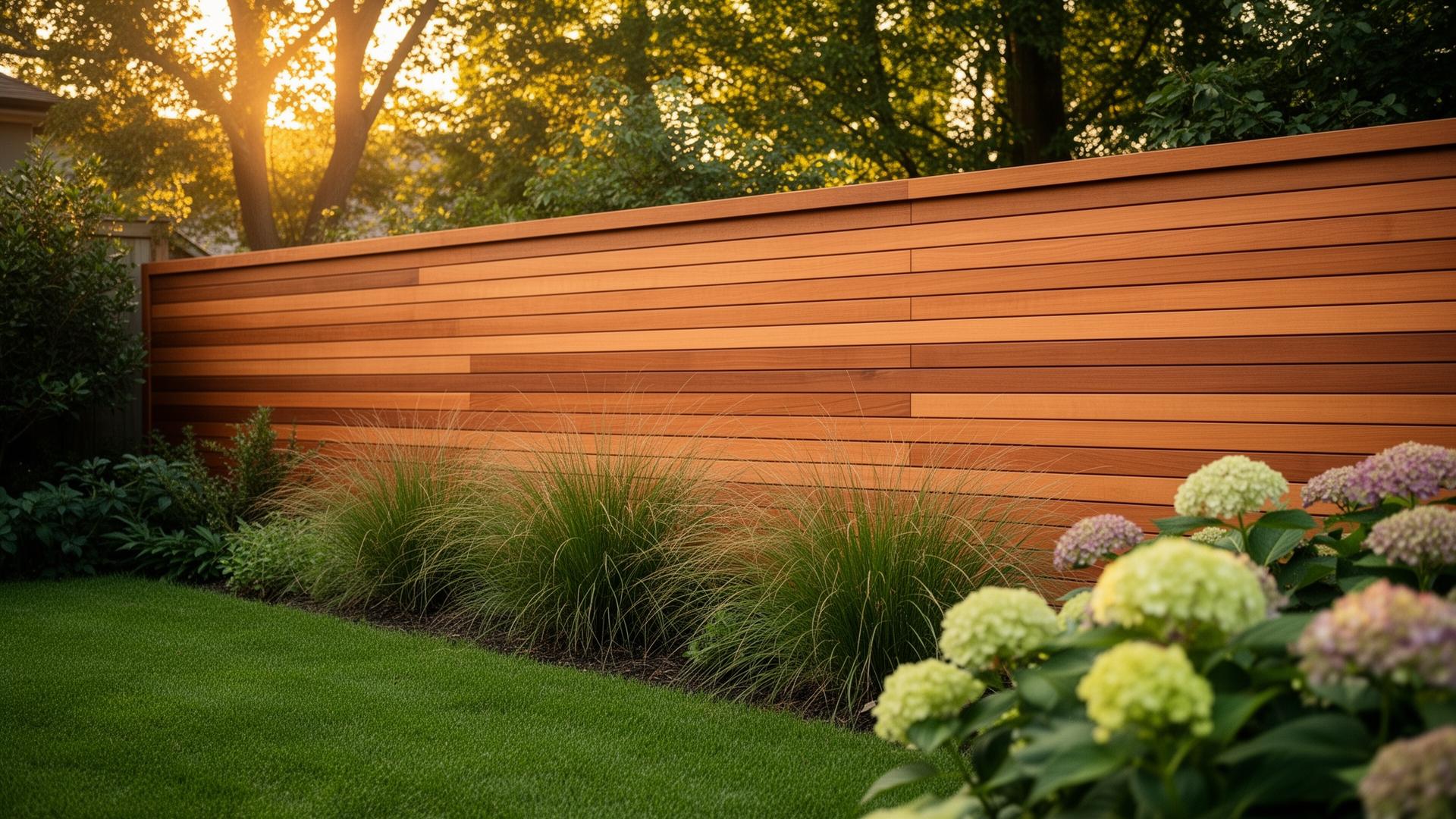
A modern horizontal cedar privacy fence with clean lines and lush plantings.
A fence is the most visible structural decision you make in a backyard. It runs the full perimeter, frames every view, and either disappears into the garden or dominates it. The best fence ideas treat the fence as architecture — not just a barrier.
This guide is organized by what you're solving for: privacy, front-yard curb appeal, modern style, low maintenance, or budget. Each section includes specific materials, heights, costs, and the mistakes that waste money.
1. Privacy Fences: Blocking Sightlines Without Blocking Light
The most requested fence is a privacy fence — and the most common mistake is building a solid wall that traps heat, blocks breezes, and looks like a prison yard. The best privacy fences filter views without sealing the yard.
- Board-on-board (shadowbox). Overlapping vertical boards with a 1-inch gap, mounted on alternating sides of the rail. Blocks direct sightlines but allows air and light through the gaps. Looks the same from both sides — ideal for shared fence lines. Cedar or pressure-treated pine. Cost: $30–$50 per linear foot installed.
- Horizontal slat fence. Horizontal cedar or redwood boards with ½-inch gaps between them. Modern, warm, and visually wider than vertical fences. Best at 5–6 feet tall; taller reads as a wall. Cost: $35–$55 per linear foot. Add a floating cap (a board set 1 inch above the top rail) for a clean modern line.
- Horizontal slat with alternating gaps. Same as above, but every other board is offset by ½ inch — creates a woven, textured look that breaks up the flat plane. Cost: $40–$60 per linear foot. Best for contemporary homes.
- Vinyl privacy panels. No gaps, no maintenance. Clean white, tan, or wood-grain finish. Best for homeowners who want privacy without staining or painting. Cost: $35–$55 per linear foot. Limitation: color choices are limited and plastic sheen is visible up close.
- Composite privacy fence. Wood-grain texture, 25-year warranty, never stains. Available in horizontal and vertical styles. Cost: $50–$80 per linear foot. Best long-term value for privacy if budget allows.
Privacy height rule: A 6-foot fence blocks seated sightlines (at a patio table). An 8-foot fence blocks standing sightlines. Most municipalities allow 6 feet without a permit; 8 feet usually requires approval.
2. Front Yard Fences: Curb Appeal First
Front yard fences must balance visibility and charm. They frame the house, define the property line, and signal the home's personality — but they can't block the house from the street or violate setback rules.
- White picket fence. The classic American front yard fence. 3–4 feet tall, spaced pickets, painted white or natural cedar. Best for cottages, farmhouses, and traditional homes. Cost: $25–$40 per linear foot installed. Use rot-resistant cedar or vinyl; painted pine needs re-painting every 3–4 years.
- Low horizontal fence. A 3-foot version of the horizontal slat fence — modern, warm, and unobtrusive. Pair with a gate in the same style. Cost: $30–$45 per linear foot. Best for mid-century and contemporary homes.
- Wrought iron or aluminum ornamental fence. 3–4 feet tall with decorative finials or scrollwork. Open design preserves sightlines to the house while defining the property. Powder-coated aluminum never rusts. Cost: $40–$60 per linear foot. Best for Victorian, Colonial, and formal gardens.
- Split-rail fence. Two or three rough-sawn cedar rails between posts. Rustic, low, and welcoming — it marks the boundary without walling off the yard. Cost: $8–$15 per linear foot. Best for country, ranch, and mountain homes.
- Stone or brick wall with iron topper. A 2-foot stone wall capped with 2 feet of iron fencing. Formal, expensive, and permanent. Cost: $80–$150 per linear foot. Best for estate-style homes.
Front yard rule: Most codes limit front yard fences to 3–4 feet for visibility and safety at corners. Check local setback rules before building.
3. Modern Fences: Clean Lines and Warm Materials
Modern fences favor horizontal lines, natural wood tones, and minimal hardware. The goal is a fence that reads as landscape architecture, not an afterthought.
- Cedar or redwood horizontal slat. 1×4 or 1×6 boards, horizontally oriented, with ¼–½-inch gaps. Left unfinished to weather to silver-gray, or sealed with a clear penetrating oil. Cost: $35–$55 per linear foot.
- Corrugated metal + wood frame. Galvanized or powder-coated corrugated steel panels set inside a cedar or black metal frame. Industrial, bold, and low-maintenance. Cost: $45–$65 per linear foot.
- Beton brut or concrete panel fence. Precast concrete panels with a wood-grain imprint, set on steel or wood posts. Heavy, permanent, and sculptural. Cost: $70–$120 per linear foot. Best for contemporary architecture.
- Black metal frame with horizontal cable. Thin black powder-coated posts with 3–5 horizontal stainless steel cables. Ultra-minimal, transparent, and wind-permeable. Cost: $50–$80 per linear foot. Best for decks and elevated properties.
- Charred shou sugi ban fence. Cedar boards torched to a deep black, then oiled. Dramatic, durable, and naturally insect-resistant. Cost: $45–$70 per linear foot. Best for Japanese-inspired and minimalist homes.
4. Low-Maintenance Fences: Set It and Forget It
Wood fences need staining every 3–5 years. If you want beauty without the upkeep, these materials deliver.
- Vinyl fencing. Never paint, never stain, cleans with a hose. Available in privacy, picket, and ranch-rail styles. Colors: white, tan, gray, and wood-grain brown. Cost: $25–$55 per linear foot. Limitation: can become brittle in extreme cold and may look plastic in direct sun.
- Composite fencing. Recycled wood fiber and plastic. Looks like wood, lasts 25+ years, no staining. Available in horizontal and vertical styles in 4–6 colors. Cost: $50–$80 per linear foot. Best premium low-maintenance option.
- Aluminum ornamental fencing. Powder-coated in black, bronze, white, or green. Never rusts, never warps, and handles snow and salt. Cost: $35–$60 per linear foot. Best for front yards and pool enclosures.
- Chain-link with slats. Add flat plastic or aluminum privacy slats to an existing chain-link fence. Instant privacy upgrade at $3–$6 per linear foot for slats alone. Best budget low-maintenance option.
- Galvanized steel panel fence. Welded wire mesh panels in 4×4, 5×5, or 6×6 grids, mounted on steel posts. Industrial, clean, and used for livestock but increasingly popular for modern homes. Cost: $15–$25 per linear foot. Add climbing vines for softness and privacy.
5. Living Fences: Green Privacy That Grows
A living fence uses plants instead of boards for privacy. It takes 1–3 years to fill in, but the result is softer, cooler, and more alive than any built fence.
- Hedge fence. Boxwood, privet, yew, or arborvitae planted 18–24 inches apart. Shear into a formal hedge at 4–6 feet tall, or let grow informally to 8+ feet. Cost: $8–$20 per linear foot for plants (less than half the cost of a wood fence). Needs trimming 2–3 times per year.
- Espalier fence. Fruit trees (apple, pear, citrus) or ornamental trees (magnolia, camellia) trained flat against a wire framework on posts. Productive, sculptural, and space-saving. Cost: $40–$80 per linear foot for frame + trees. Best for formal gardens and edible landscaping.
- Bamboo screen. Clumping bamboo (not running) in planters or a contained bed. Grows 8–12 feet in one season. Cost: $60–$100 per planter. Best for fast privacy in warm climates. Must use clumping varieties or root barriers.
- Willow or hazel hurdle fence. Hand-woven panels of willow or hazel branches on a wooden frame. Rustic, biodegradable, and 3–4 feet tall. Cost: $30–$50 per panel. Best for cottage gardens and naturalistic landscapes.
- Vine-covered wire fence. Galvanized wire mesh or cable system on posts, with jasmine, clematis, climbing hydrangea, or roses. Year two: a flowering green wall. Cost: $8–$15 per linear foot for wire + posts. Best for gardeners who want beauty and privacy together.
6. Material Comparison: Wood vs Vinyl vs Metal vs Composite
| Material | Cost/ft | Maintenance | Lifespan | Best For |
|---|---|---|---|---|
| Pressure-treated pine | $20–$35 | Stain every 3–5 yrs | 15–20 yrs | Budget privacy |
| Cedar/redwood | $30–$50 | Seal or stain every 3–5 yrs | 20–25 yrs | Natural beauty |
| Vinyl | $25–$55 | Hose clean | 20–30 yrs | Low maintenance |
| Composite | $50–$80 | Hose clean | 25–30 yrs | Premium low-maintenance |
| Aluminum ornamental | $35–$60 | Hose clean | 30+ yrs | Front yard / pool |
| Wrought iron | $50–$90 | Paint every 5–10 yrs | 30+ yrs | Ornamental / formal |
| Chain-link | $10–$20 | Rare | 20+ yrs | Security / budget |
| Welded wire + vines | $8–$15 | Prune vines yearly | 15–20 yrs | Gardeners / green privacy |
7. The $500 Fence Refresh
If you have an existing fence that is structurally sound but looks tired, here's the $500 plan to transform it:
- $120 — Premium exterior stain or paint (Behr, Cabot, or Sherwin-Williams) for 100 linear feet of fence
- $100 — Two slatted cedar privacy screens (4 ft × 6 ft) to block the worst sightlines
- $80 — Four tall planters + potting soil
- $60 — Bamboo or tall grasses for instant green screening
- $50 — Lattice topper panels (2 ft × 8 ft) to raise visual height
- $40 — Climbing vine plants (jasmine, clematis, hydrangea) + wire trellis hardware
- $30 — Solar cap lights for post tops
- $20 — Replacement hardware (hinges, latches) for the gate
- Total: $500
8. The $2,000 Fence Upgrade
With $2,000, you can replace a short section of fence or upgrade an entire small yard:
- $800 — 40 linear feet of cedar horizontal slat fence (DIY install)
- $250 — Matching horizontal-slat gate with black hardware
- $200 — Four large planters + mature evergreen shrubs
- $180 — Two 6-foot slatted cedar privacy screens
- $150 — String lights on galvanized cable along fence line
- $120 — Post cap lights (solar or low-voltage LED)
- $100 — Climbing vine trellis system + plants
- $80 — Decorative house numbers or address plaque on gate
- Total: ~$1,880
9. Common Fence Mistakes
- Not checking property lines. Build 6 inches inside your property line, not on it. A survey ($400–$800) prevents neighbor disputes and potential removal.
- Ignoring height and setback codes. A 6-foot fence in a front yard or on a corner lot may violate local zoning. Fines and removal orders are expensive.
- Wrong post depth. Fence posts should be set 2 feet deep in concrete for a 6-foot fence, 3 feet for an 8-foot fence. Shallow posts lean and fail in wind.
- Wrong wood species. Pine and spruce rot in 5–8 years if not pressure-treated. Use cedar, redwood, or pressure-treated lumber rated for ground contact.
- No gap for drainage. Solid panel fences need a 2-inch gap at the bottom so water drains and doesn't pool against the wood. Without it, the bottom rail rots in 2–3 years.
- Forgetting the gate swing. A gate that swings into a slope, against a planter, or into the house door is useless. Plan gate location and swing direction before building.
- Dark stain in full sun. Dark colors reach 140°F on the surface and cause wood to check and warp faster. Use light gray, sage, or natural tones in sunny yards.
10. Fence Ideas by Yard Type
- Small urban backyard: Horizontal cedar slat at 5–6 feet. Open frame makes the yard feel wider. Add one slatted screen for the worst sightline.
- Corner lot: Lower fence (3–4 feet) on the street-facing sides for visibility; 6-foot privacy on the back and interior sides. Check local corner-lot sight-triangle rules.
- Shared fence line (neighbor's fence on property line): Add 2-foot lattice topper or plant clumping bamboo 18 inches inside the fence for privacy without rebuilding.
- Pool enclosure: Aluminum ornamental or vinyl privacy fence with self-closing, self-latching gate. Many codes require 4-foot minimum and no climbable horizontal rails.
- Front yard cottage/Colonial: White picket fence at 3–4 feet with a matching gate and mailbox post. Paint every 4 years or use vinyl for zero maintenance.
- Sloped yard: Split-rail or stepped-panel fence. Avoid solid horizontal board fences on steep slopes — they require complex racking or stepped gaps.
- Dog yard: 6-foot solid privacy fence or chain-link with 1-inch vinyl privacy slats. Add a 1-foot underground wire apron if your dog digs. Avoid horizontal slats — dogs can use them as ladders.
Frequently Asked Questions
What is the cheapest fence to build?
The cheapest fence is a split-rail or post-and-rail fence using rough-sawn cedar or pressure-treated pine — about $8–$15 per linear foot in materials. For privacy, the cheapest option is welded-wire mesh (livestock panel) mounted on T-posts or wood posts at $4–$8 per linear foot. Bamboo rolled panels on existing posts run $6–$10 per linear foot. The cheapest way to add privacy to an existing fence is paint or stain ($40–$80) plus climbing vines on a wire trellis ($40) — under $150 total.
What fence adds the most privacy?
A solid board-on-board or shadowbox wood privacy fence at 6–8 feet tall blocks the most sightlines. Vinyl privacy panels (no gaps) are the lowest-maintenance option and last 20+ years. For instant privacy without a full fence: add a 2-foot lattice topper to an existing 4-foot fence, install slatted cedar screens 1–2 feet inside the fence line, or plant clumping bamboo in tall planters. Each adds 2–4 feet of visual screening without rebuilding the fence.
How tall can a backyard fence be?
Most municipalities allow backyard fences up to 6 feet without a permit and 8 feet with a permit. Front yard fences are typically limited to 3–4 feet for visibility and curb appeal. Corner lots often have additional height restrictions on the sides facing the street. Always check local zoning before building — height violations can require costly removal or modification. If you need more privacy than code allows, use lattice toppers (often exempt from height limits) or tall plantings inside the fence line.
Wood, vinyl, or metal fence — which is best?
Wood is best for natural looks and custom heights but needs staining every 3–5 years and can warp or rot. Vinyl is best for low maintenance — it never needs paint and cleans with a hose — but comes in limited colors and can look plastic in full sun. Metal (aluminum or wrought iron) is best for front yards and ornamental looks but offers no privacy unless paired with inserts or plantings. Composite fencing splits the difference: wood-grain look, no staining, 25-year warranty, but costs 2–3x wood. Rule: backyard = wood or vinyl for privacy; front yard = metal or low picket for curb appeal.
How much does a privacy fence cost per foot?
Privacy fence costs per linear foot (installed): pressure-treated pine $20–$35, cedar $30–$50, vinyl $35–$55, composite $50–$80, and aluminum privacy $60–$90. A 100-foot privacy fence runs $2,500–$5,500 depending on material, height, and terrain. DIY saves 40–50% on labor. The cheapest privacy option is welded-wire with climbing vines at $8–$12 per foot. The highest-ROI upgrade if you already have a 4-foot fence is a lattice topper ($15–$25 per foot installed) that brings total height to 6 feet.
Can I build a fence on a slope?
Yes, but the method matters. For gradual slopes: use the 'stepped' method — each fence panel stays level, with the bottom stepping down to follow the grade. This leaves a triangular gap under each panel that needs a retaining wall or fill. For steep slopes: use the 'racked' method — fence boards are individually cut to angle with the slope, following the grade continuously. Racked fences look more natural but cost more in labor. On very steep terrain, a split-rail or post-and-rail fence is easier to install than a solid panel fence.