
Cottagecore: The Complete 2026 Style Guide
Cottagecore turns any home — including an apartment — into a romantic rural retreat. This guide covers the exact palette, signature furniture, textiles, plants, and a room-by-room shopping list to build the look authentically, without it tipping into theme park or doll house territory.
Updated May 2026 · 9 min read
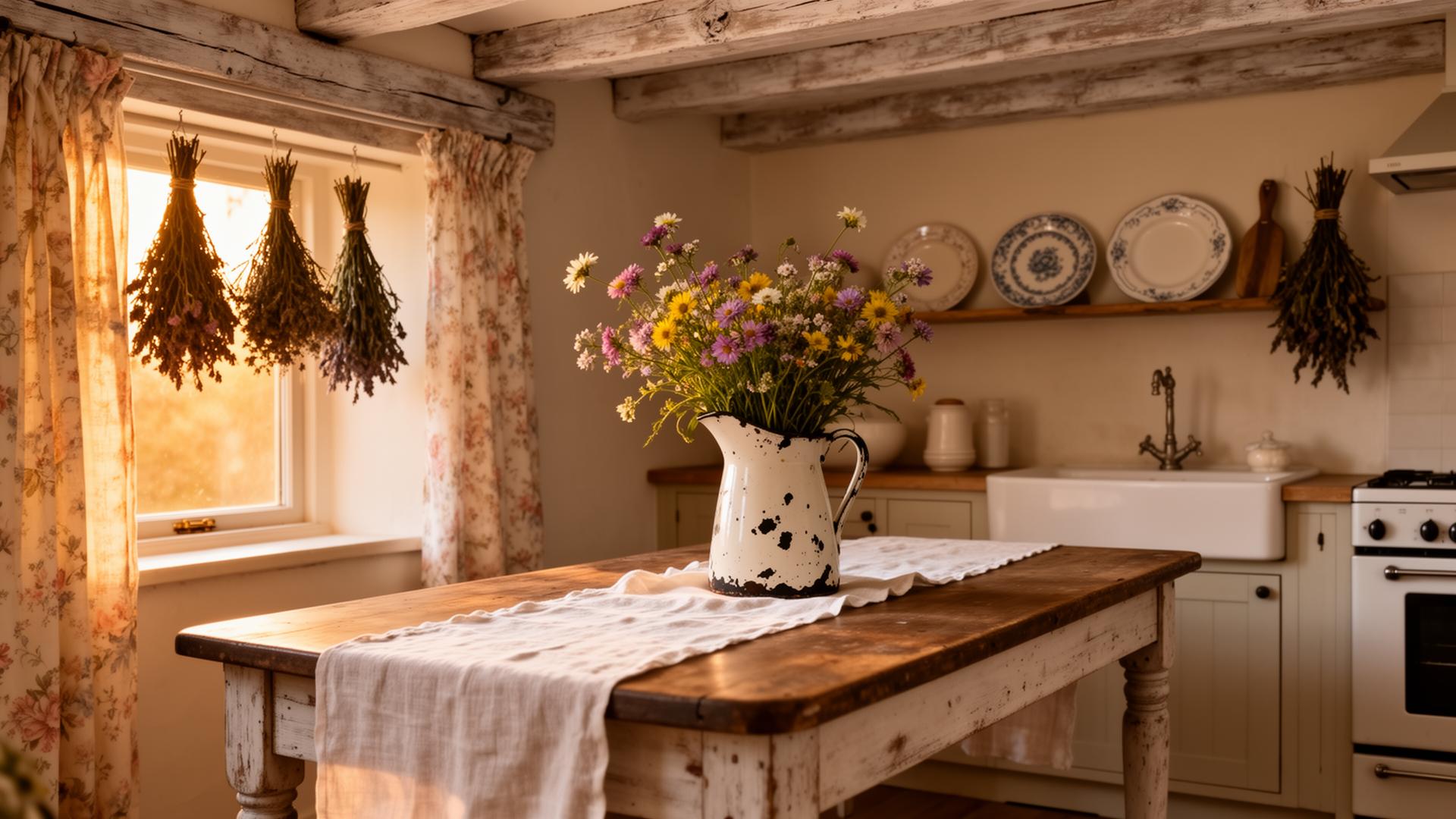
The cottagecore formula: weathered wood, ironstone, wildflowers, floral textiles, golden hour light.
Cottagecore began on Tumblr around 2018 as a lifestyle aesthetic — baking bread, tending herb gardens, wearing linen — and has settled into a coherent and enduring interior style. Unlike fast trends, it's grounded in centuries of real rural English and American homes, which is why it ages well.
The Five Elements of a Cottagecore Room
- One floral element. Wallpaper, curtains, or a slipcovered sofa — large-scale florals are the heart of the aesthetic.
- Visibly aged wood. Distressed paint, scrubbed pine, beadboard. New-looking wood reads modern, not cottage.
- Open shelf dishware. Ironstone, transferware, or simple white ceramics on display, not hidden behind cabinet doors.
- Wildflowers. A fresh bouquet of cosmos, daisies, sweet peas, or garden roses in a chipped pitcher — never store-bought roses in a vase.
- Layered soft textiles. A quilt, a linen tablecloth, a lace curtain, a sheepskin rug — never just one.
The Cottagecore Palette
- Farrow & Ball Tallow (No. 203) — the warm cream that anchors most cottagecore rooms.
- Farrow & Ball Calluna (No. 270) — soft dusty lilac for a bedroom.
- Benjamin Moore Guilford Green (HC-116) — sage green for cabinets or trim.
- Sherwin-Williams Romance (SW 6323) — dusty rose for a powder room or accent wall.
- Farrow & Ball Cooking Apple Green (No. 32) — the classic English cottage green; great for a kitchen island.
Furniture: Painted, Caned, and Slipcovered
- Farmhouse dining table — scrubbed pine, distressed white, or natural oak with painted legs.
- Ladder-back or rush-seat chairs — mismatched pairs from estate sales work beautifully.
- Slipcovered linen sofa — washable, casual, the cottagecore alternative to a leather sofa.
- Wrought-iron or painted wood bed frame — never upholstered or modern.
- Painted wardrobe or hutch — chipped finish, brass or porcelain knobs.
- Caned headboard or chair — adds warmth without bulk.
Textiles to Layer
Layered linen, cotton, and wool textiles do more for cottagecore than any piece of furniture. The shortlist: washed linen curtains, a patchwork or wedding-ring quilt at the foot of the bed, a lace or eyelet table runner, gingham or ditsy floral cushion covers, and a sheepskin or hooked rug. Stick to natural fibers — synthetic shines wrong under warm light.
Plants, Flowers, and the Garden Indoors
Wildflowers and garden roses beat hothouse florals every time. In summer, cut cosmos, daisies, sweet peas, foxglove, or hydrangea. In winter, dried lavender, baby's breath, eucalyptus, or wheat. House plants should lean herbal — rosemary on the windowsill, ivy trailing from a shelf, a small olive or lemon tree. Avoid tropical plants like monstera or fiddle leaf — wrong climate, wrong vibe.
The Cottagecore Shopping List (Living Room + Kitchen)
- Slipcovered linen sofa (cream, oatmeal, or soft floral)
- Hooked or vintage rag rug
- Antique or vintage-style painted side table
- Pair of ironstone or stoneware table lamps with linen shades
- Linen curtains, floor length, on wood or brass rods
- Patchwork or wedding-ring quilt as a throw
- 3–5 mismatched gingham or floral throw pillows
- Open shelves with 6–12 pieces of ironstone or transferware
- Vintage enamel or stoneware pitcher for flowers
- Bread board / vintage cutting boards displayed on the counter
- Cast iron or enameled cookware (Le Creuset or vintage)
- Linen tea towels and apron on a wall hook
- Herb pots — rosemary, thyme, basil on the windowsill
- Floral or botanical print art in distressed wood frames
- Beeswax taper candles in brass or ceramic holders
- Vintage books with cloth covers stacked on a side table
Common Cottagecore Mistakes
- Going too matchy. Don't buy the entire Magnolia collection in one trip. Mix new with thrifted.
- Faux florals. Cheap silk flowers undo the entire aesthetic. Use real or dried.
- Modern hardware. Brushed nickel reads instantly wrong. Swap for brass, porcelain, or wood knobs.
- Pure white walls. Use a warm cream or off-white at minimum; pure white reads modern minimalist.
- Too much pattern, not enough breathing room. One large floral element per room is enough.
How It Connects to Other Styles
Cottagecore overlaps significantly with grandmillennial style — both love florals, pattern, and antique furniture. Cottagecore is more rural, grandmillennial more formal. If you love the soft palette but want a calmer, cleaner room, Japandi shares the natural-materials philosophy with a quieter aesthetic.
Frequently Asked Questions
What is cottagecore?
Cottagecore is an interior and lifestyle aesthetic that romanticizes rural life — small English cottages, herb gardens, vintage kitchens, handmade textiles, and a slow, agrarian rhythm. In interiors it translates to floral wallpapers, painted wood furniture, ironstone dishware, wildflower bouquets, exposed beams, soft sun-faded fabrics, and a deep palette of cream, sage, blush, and butter yellow. The look feels like a Beatrix Potter book updated for 2026.
What colors define cottagecore interiors?
Soft, warm, garden-inspired colors: cream and antique white, butter yellow, sage and moss green, dusty rose and faded coral, soft sky blue, and warm taupe. The palette should look like wildflowers, sun-bleached linen, and weathered wood. Avoid pure white (too clinical), gray (too modern), and any neon or saturated jewel tones.
Can cottagecore work in an apartment?
Yes — cottagecore is one of the most apartment-friendly aesthetics because it relies on textiles, dishware, plants, and small painted furniture rather than architectural features. Hang a removable floral wallpaper or fabric panel on one wall, swap rental-grade hardware for vintage brass knobs, layer a sheepskin or vintage rug, fill the kitchen with open-shelf ironstone, and add wildflowers in a chipped enamel pitcher. The aesthetic is about objects and textiles, not square footage.
What furniture suits cottagecore?
Painted wood pieces in chipped or distressed finishes — farmhouse tables, ladder-back chairs, wardrobes, hutches, and writing desks. Wrought-iron beds, slipcovered sofas in linen or floral cotton, caned chairs, and tufted footstools. Mix new from Magnolia, Pottery Barn, and Anthropologie with thrift and estate-sale finds. The aesthetic is fundamentally a thrifted aesthetic.
What textiles are essential for cottagecore?
Washed linen (curtains, tablecloths, bedding), cotton ditsy floral prints, ticking stripes, gingham, lace, eyelet, and handmade quilts. Avoid anything synthetic, glossy, or modern. A patchwork quilt at the foot of the bed, a lace runner on the table, and linen curtains are the highest-impact additions.
How is cottagecore different from farmhouse style?
Farmhouse style (especially Modern Farmhouse) is cleaner, larger-scale, and uses more black-and-white contrast, shiplap, and industrial hardware. Cottagecore is softer, smaller-scale, more pattern-heavy, and emphasizes florals, handmade textiles, and visible age. A farmhouse kitchen feels like a renovated barn; a cottagecore kitchen feels like a 100-year-old English cottage someone is still using.