
Tub to Shower Conversion Cost in 2026: Line-by-Line Pricing
A tub to shower conversion costs $1,200 to $12,000 in 2026, and most homeowners pay $3,000 to $6,000. The price depends on three decisions: prefab kit or tile, whether the drain stays put, and whether you want a curb or a curbless entry. This guide breaks down every line item, the two cost traps that blow up quotes, and how to compare bids without overpaying.
Updated September 2026 · 11 min read
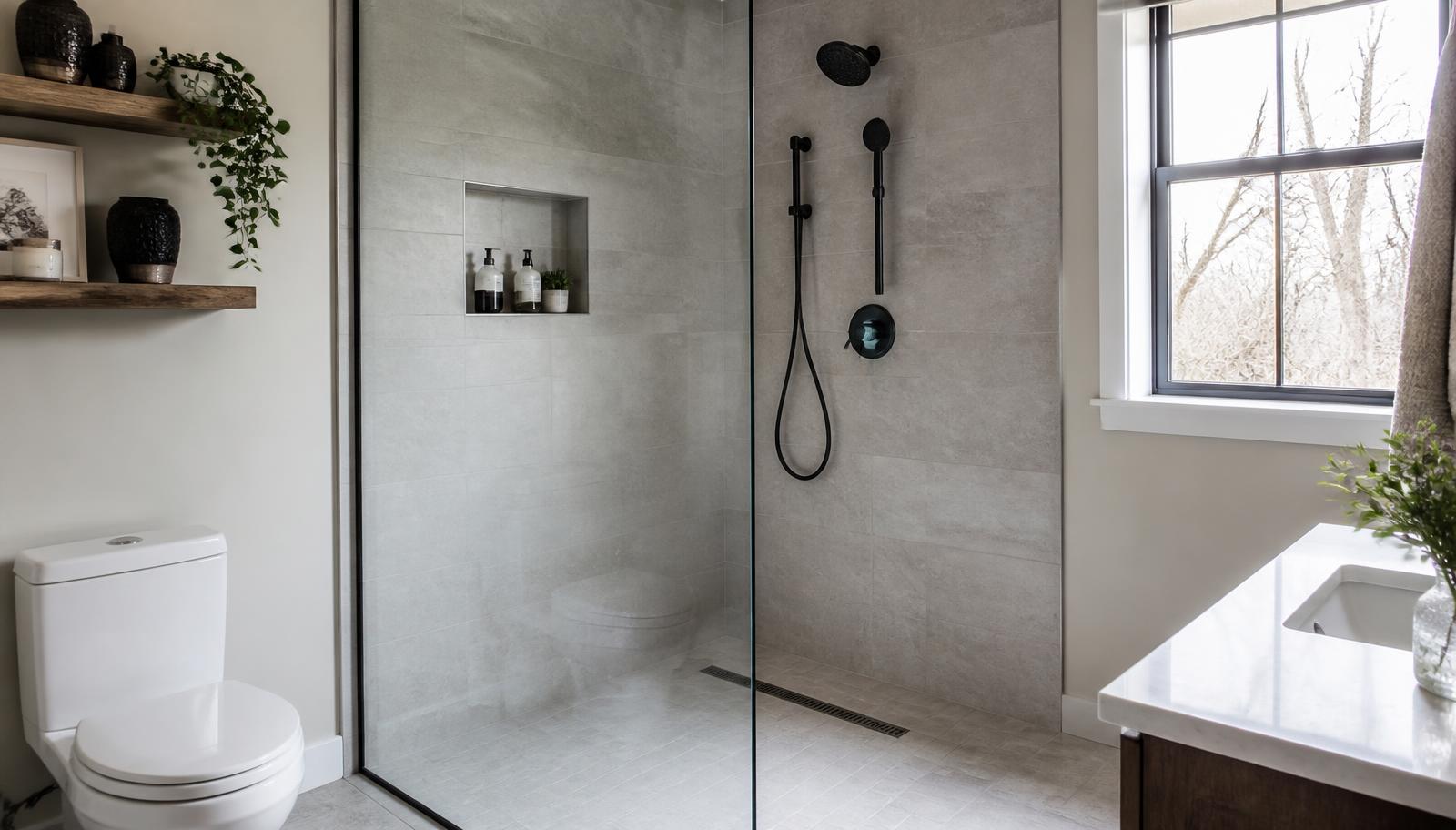
A same-footprint conversion reuses the tub's drain and framing — that single fact is why prefab conversions can be under $3,000.
Short answer
Tub to shower conversion cost in 2026 averages $3,000–$6,000 nationally. Prefab acrylic kit in the existing alcove: $1,200–$3,000. Custom tiled shower: $4,000–$8,000. Curbless walk-in with frameless glass: $8,000–$12,000+. Labor is 40–60% of the total, and relocating the drain adds $500–$1,500.
Cost Snapshot
| Item | Typical Range (USD) | Notes |
|---|---|---|
| National average | $3,000 – $6,000 | Most homeowners land here for a same-footprint conversion with a quality prefab or basic tile shower. |
| Budget / prefab kit | $1,200 – $3,000 | Acrylic or fiberglass shower kit dropped into the old tub alcove, existing drain reused. |
| Midrange tiled shower | $4,000 – $8,000 | New pan, waterproofing, ceramic or porcelain tile, glass panel, new valve. |
| High-end / curbless | $8,000 – $12,000+ | Curbless entry, linear drain, floor structure modified, large-format tile or stone, frameless glass. |
| Same-day acrylic overlay | $4,000 – $10,000 | Branded one-to-two-day installers (Bath Fitter, Jacuzzi Bath Remodel, Re-Bath). |
| Shower base / pan | $150 – $1,500 | Acrylic pans are cheapest; mud-set or curbless tiled pans are the most expensive. |
| Labor | $1,000 – $4,500 | Plumber, tile setter, and carpenter. Usually 40–60% of the total. |
| Permits | $75 – $500 | Required in most jurisdictions when the drain moves or plumbing is altered. |
| Typical timeline | 1 day – 2 weeks | Prefab kits: 1–3 days. Tiled showers: 5–12 days with curing time. |
Ranges reflect 2024–2026 homeowner-reported quotes and national contractor pricing. Coastal metros typically run 15–25% above the U.S. average.
Check prices: get a personalized cost estimate
Tell us about your bathroom and we'll send back a realistic cost range for your project type and area, plus a checklist of the questions to ask every contractor before you sign. No cost, no obligation.
Line-by-Line Cost Breakdown
These are the line items that should appear on any itemized conversion bid. If a quote gives you one number, ask for it broken out this way.
| Line item | Range | What drives it |
|---|---|---|
| Demolition & tub removal | $300 – $1,000 | Breaking out a cast-iron tub costs more than removing acrylic. Includes hauling and disposal fees. |
| Shower base or pan | $150 – $1,500 | Acrylic/fiberglass pan $150–$600. Mud-set tiled pan $800–$1,500 including the waterproofing membrane. |
| Plumbing | $400 – $2,000 | Reusing the existing tub drain is the biggest saving available. Moving the drain means opening the floor — add $500–$1,500. |
| Shower valve & fixtures | $200 – $1,200 | A pressure-balancing valve is code in most states; thermostatic and multi-head systems cost more and may need a bigger supply line. |
| Wall surround | $400 – $4,000 | Three-piece acrylic surround $400–$1,200. Ceramic tile $1,200–$2,500. Porcelain slab or stone $2,500–$4,000+. |
| Waterproofing | $200 – $800 | Cement backerboard plus a liquid or sheet membrane. Never skip this on a tiled shower. |
| Glass enclosure or door | $300 – $2,500 | Framed sliding door $300–$700. Semi-frameless $700–$1,200. Frameless fixed panel $1,200–$2,500. |
| Grab bars, bench, niche | $150 – $900 | Blocking must go in before the walls close up — retrofitting later costs 3× more. |
| Ventilation | $200 – $600 | Larger showers push more moisture; an undersized fan is the most common cause of post-remodel mildew. |
| Permits & inspection | $75 – $500 | Typically required whenever the drain relocates or new supply lines are run. |
| Contingency | 10 – 15% of project | Rot in the subfloor behind a leaking tub is discovered on a meaningful share of conversions. |
Prefab Kit vs Tiled Shower vs Same-Day Acrylic
- Prefab acrylic or fiberglass kit — $1,200–$3,000. Fastest and cheapest. One-piece units won't fit through most interior doorways, so plan on a three-piece kit for an existing bathroom. Fewer grout lines means less maintenance, but design options are limited and the surface scratches.
- Custom tiled shower — $4,000–$8,000. Best appearance and resale impression, unlimited layout options, and niches and benches are easy to add. Requires competent waterproofing — this is where cheap tile jobs fail in year three.
- Same-day acrylic overlay — $4,000–$10,000. Branded installers fit molded acrylic over the existing structure in 1–2 days with a lifetime acrylic warranty. You pay a premium for speed, and hidden damage behind the old surround gets covered instead of fixed. Insist on a moisture inspection before they panel over it.
The Two Cost Traps
- Moving the drain. A tub drain sits at the end of the alcove; a shower drain usually sits in the center. Some prefab bases are designed for an end drain precisely to avoid this. If the drain must move, the floor opens and the bid gains $500–$1,500 plus a plumbing permit.
- Rot behind the old tub. Tubs that leaked at the surround joint often sit on a soft subfloor. This is discovered during demolition on a meaningful share of jobs and adds $400–$2,500. Budget a 10–15% contingency; a contractor who refuses to write a change-order process into the contract is a red flag.
Accessibility and Aging in Place
The most common reason for a conversion in 2026 is mobility, not style. If aging in place is the goal, spend the money on these and skip the frameless glass:
- Curbless or low-threshold entry (max 1/2" for wheelchair access).
- Blocking in the walls for grab bars, installed before the walls close — $150 now vs $600+ later.
- 36" × 36" minimum, 60" × 30" preferred for a caregiver or a shower chair.
- Handheld shower on a slide bar plus a pressure-balancing or thermostatic valve to prevent scalding.
- Slip-resistant floor tile — 2" mosaic tile with more grout lines gives better traction than large-format.
Nine Ways to Cut the Cost
- Keep the existing footprint and reuse the tub drain.
- Choose a three-piece acrylic surround instead of tile.
- Accept a standard curb rather than a curbless entry.
- Use a framed or semi-frameless door instead of frameless glass.
- Supply your own valve and fixtures to remove contractor markup.
- Handle demolition and disposal yourself if the tub is acrylic.
- Tile only the wet walls; paint the rest with a bathroom-grade product.
- Book off-season (January–March in most markets) for 10–15% lower labor.
- Bundle with other bathroom work on the same trip — one mobilization, one permit.
Check prices: get a personalized cost estimate
Tell us about your bathroom and we'll send back a realistic cost range for your project type and area, plus a checklist of the questions to ask every contractor before you sign. No cost, no obligation.
Frequently Asked Questions
How much does a tub to shower conversion cost in 2026?
A tub to shower conversion costs $1,200 to $12,000 in 2026, with most homeowners paying $3,000 to $6,000. A prefab acrylic shower kit installed in the existing tub alcove runs $1,200–$3,000, a midrange tiled shower runs $4,000–$8,000, and a curbless or high-end tiled conversion with frameless glass runs $8,000–$12,000+.
Is it cheaper to convert a tub to a shower or replace the tub?
Converting to a shower is usually cheaper when you reuse the existing drain and footprint, because there is no tub unit to buy and no floor structure to reinforce. A straight tub-for-tub replacement runs $1,500–$5,000; a same-footprint prefab shower conversion runs $1,200–$3,000. The conversion becomes more expensive than a swap only once you add tile, curbless entry, or a relocated drain.
Do you need a permit for a tub to shower conversion?
In most U.S. jurisdictions, yes — a plumbing permit is required whenever the drain is relocated, the valve is replaced, or supply lines are altered. Some cities exempt a like-for-like fixture swap that reuses the existing drain. Always confirm locally, and insist the contractor pulls the permit: unpermitted bathroom work is a standard flag during a home inspection and can void insurance coverage on a water-damage claim.
How long does a tub to shower conversion take?
A prefab acrylic kit installed in the existing alcove takes 1–3 days. A branded same-day acrylic overlay takes 1–2 days. A custom tiled shower takes 5–12 days including waterproofing and grout curing, and a curbless conversion that requires modifying the floor structure takes 2–3 weeks.
Does removing your only bathtub hurt resale value?
It can, in one specific case: if the conversion leaves the home with zero bathtubs and the home is likely to sell to families with small children. Appraisers rarely deduct directly, but buyer pools narrow. If you have a second full bath with a tub, or the home is in a market skewed toward downsizers and retirees, a walk-in shower typically helps rather than hurts.
Can you convert a tub to a shower in one day?
Yes, with an acrylic overlay system from a branded installer such as Bath Fitter, Re-Bath, or Jacuzzi Bath Remodel. They fit a molded acrylic base and wall panels over the existing structure in 1–2 days for $4,000–$10,000. The trade-offs are higher cost than a DIY-supplied prefab kit, limited design options, and the fact that any hidden rot behind the old surround is covered rather than repaired.
What is the cheapest way to convert a tub to a shower?
Keep the existing alcove and drain, buy a one-piece or three-piece acrylic shower kit ($400–$900 at a big-box retailer), and hire a plumber and handyman for the install. Total lands around $1,200–$2,500. The savings come from not moving plumbing and not tiling — those two decisions account for most of the spread in conversion quotes.
What does a curbless walk-in shower conversion cost?
A curbless (zero-threshold) conversion costs $6,000 to $12,000+ because the subfloor must be recessed or the whole bathroom floor raised so water drains without a curb. Add a linear drain ($300–$900), a sloped mud pan, and a full waterproofing membrane. It is the standard choice for aging-in-place and wheelchair access, and it is the single most expensive variable in a conversion quote.
Will a shower conversion fit in the old tub space?
Almost always. A standard alcove tub is 60" × 30–32", which is larger than the 36" × 36" code minimum for a shower and comfortably fits a 60" × 30" shower base. That's why same-footprint conversions are cheap — the framing, drain, and wall openings are already the right size.
How do I compare tub to shower conversion quotes fairly?
Get three itemized bids and compare line items, not totals. Check that each quote names: the base or pan type, the waterproofing method, the valve brand and model, whether the drain moves, who pulls the permit, glass type, and the contingency handling for subfloor rot. A single lump-sum number is the most common way scope differences get hidden.